


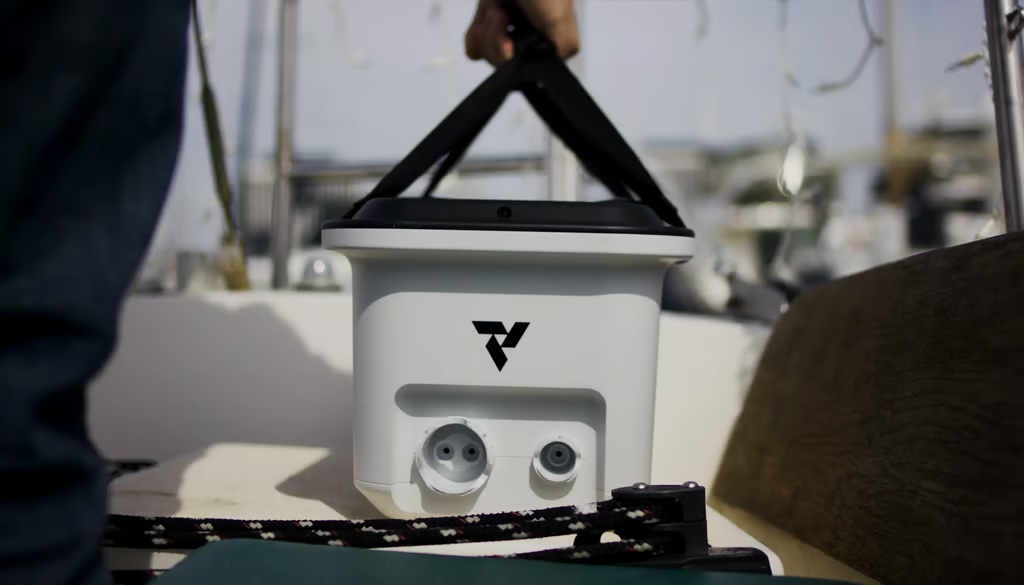
A backup drinking-water supply could soon fit beside a remote team’s toolbox.
Vital Lyfe, a startup founded by former SpaceX engineers, estimates a final price of $749 for its portable Access desalination device and says it can produce up to 22.7 liters of drinking water per hour from seawater. The company is accepting $8 refundable reservations, with its website listing US shipments for fall 2026 and international availability later in 2026 or 2027, depending on demand.
For businesses operating near the coast or beyond reliable water infrastructure, the appeal is a portable backup supply. Whether it makes sense depends on power, maintenance, and how much water a team actually needs.
Cheaper, simpler, smaller
The interesting thing about Access isn’t that it uses some revolutionary desalination technology. It’s that Vital Lyfe wants to make an otherwise expensive and complicated process cheaper, simpler, and small enough to carry around.
The device uses reverse osmosis (RO), an established desalination method that uses pressure to separate freshwater from dissolved salts. The device lets water molecules pass through an internal membrane while rejecting most dissolved salts, leaving freshwater on one side and concentrated brine on the other.
According to Vital Lyfe’s product specifications, Access has the following advertised capabilities:
| Specification | Company-listed figure |
|---|---|
| Weight | 11.3 kg |
| Dimensions | 20 × 9 × 8 inches |
| Integrated battery | 210 Wh |
| Seawater output | Up to 22.7 liters per hour |
| Battery runtime | Approximately one hour in saltwater containing 32,000 ppm of total dissolved solids |
| Operating power | Approximately 200 watts under those saltwater conditions |
| External power | AC and DC compatible |
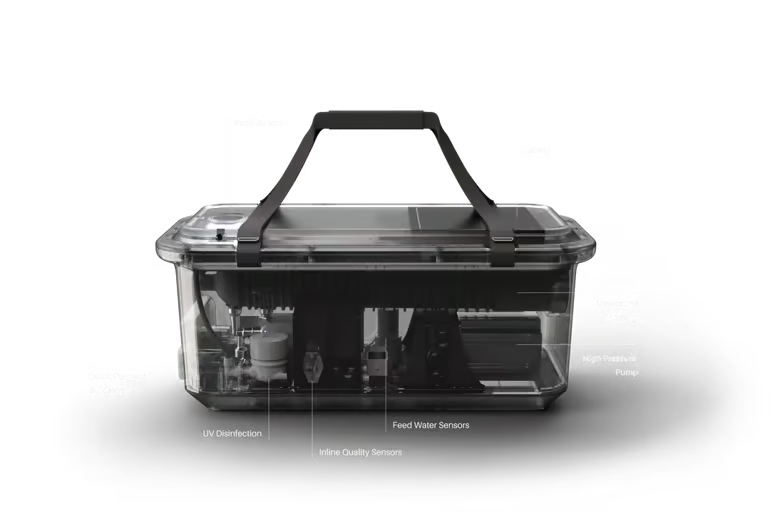
The company has also tried to simplify operation and maintenance using automated controls and onboard sensors to manage the desalination process. Fast Company reported that Vital Lyfe says its filters can be replaced in under 30 seconds.
Vital Lyfe estimates Access’s final price at $749. Fast Company reports that marine watermakers typically cost thousands of dollars, although output, power requirements, and included equipment matter when comparing prices. The company’s bet is that reducing component complexity, simplifying manufacturing, and designing for mass production can bring the technology within reach of ordinary consumers.
How businesses stand to benefit
For small hotels, resorts, and other hospitality businesses in coastal or remote locations, Access could supplement drinking-water supplies. Whether it reduces deliveries would depend on actual output, operating hours, and the number of guests and staff it needs to serve.
Farms and agricultural businesses could also use it to meet limited drinking-water needs for workers in areas where freshwater is difficult to access. However, its output is nowhere near enough to irrigate large farms. Boat operators, offshore teams and emergency services are other potential customers.
For emergency use, buyers should consider how a portable water supply fits into their broader disaster-management planning. The first step is matching the advertised output to daily drinking-water demand. Businesses should estimate how many people the device would serve and how many hours it would need to operate, then confirm performance under their expected water conditions.
Before placing an order, buyers should check:
- Power arrangements: How the unit would run or recharge during an extended outage, including the cost of any additional power equipment.
- Maintenance costs: Replacement-membrane prices, cleaning requirements, and storage procedures between uses.
- Water-quality evidence: Test results covering the intended source water and operating conditions.
- Support and delivery: Confirmed shipping dates, warranty coverage, and replacement-part availability in the destination market.
- Brine handling: Instructions for managing the concentrated saltwater left by desalination.
A trial at the intended location would help establish actual output and maintenance demands. Recording usable water produced, power consumed, and consumable costs would also give buyers a basis for calculating cost per liter.
A cost-benefit analysis should compare the device’s purchase and operating costs with delivered water and other available backup arrangements. Access’s business value will depend on whether it can supply enough water, with manageable operating demands, when the usual supply is interrupted.
Read more: Water availability also shapes major infrastructure decisions. Indonesia’s review of a planned 640MW AI campus shows how water requirements and environmental approvals can affect project timelines.