
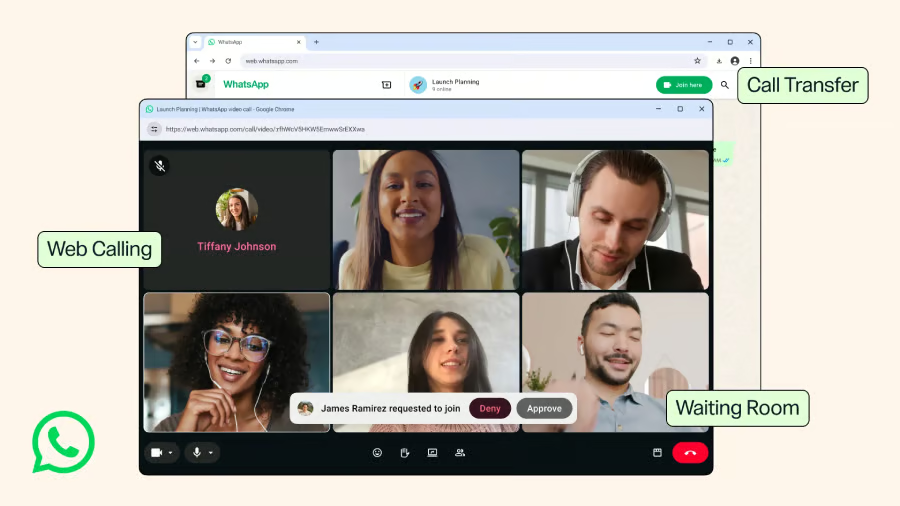


WhatsApp Web users no longer need the desktop app to make a call.
Meta is rolling out end-to-end encrypted voice and video calling directly in the browser, alongside a Calls tab and several broader calling improvements. The change particularly benefits people using Linux, shared computers, low-storage devices, or work systems that restrict software installations.
Browser calling closes one of the largest remaining gaps between WhatsApp Web and the platform’s mobile and desktop apps, although users will need to grant the site access to their microphone and camera.
Web calling comes to WhatsApp web
On July 28, WhatsApp announced Web Calling, bringing a long-expected feature to its browser-based platform.
The addition allows users to initiate and receive WhatsApp calls in their browser, without switching to the desktop app or grabbing their phones. That means WhatsApp would now be able to request access to the microphone and camera, just like Zoom and Google Meet do.
WhatsApp says the feature benefits students using shared computers, employees whose work devices restrict software installations, and users who simply prefer working in a browser.
The feature may be particularly useful for Linux users, who do not have an official WhatsApp desktop application. Browser calling also removes another barrier for people using low-storage devices, increasing the platform’s accessibility.
What else is changing for WhatsApp calls
Browser calling is the headline addition, but WhatsApp also announced five accompanying improvements to its calling experience.
A new Calls tab gives users a dedicated place to view and delete recent call history, manage favorite contacts, and quickly start voice or video calls from the browser.
The company has also introduced call transfer, allowing users to move an active call between linked devices without disconnecting, making it easier to switch from a computer to a phone or vice versa.
Group calls are also receiving waiting rooms, enabling hosts to review and approve participants before they join a call through a shared link. WhatsApp says its Quick HD feature allows calls to shift to higher-resolution video faster when network conditions support it. Improved noise suppression is intended to reduce background sound and make voices clearer.
What's hot at TechRepublic
- Blackpoint Cyber vs. Arctic Wolf: Which MDR Solution is Right for You?
- Why AWS Sellers Choose Deepgram Over Other Voice AI Tools
- SS&C Intralinks DealCentre AI vs. Datasite: Which platform is built for the future of dealmaking?
- SS&C Intralinks FundCentre AI vs. Juniper Square: Which platform better supports modern private markets fund managers?
- Verito vs. Rightworks: Which IT Provider Is Best for Your Firm?
Security considerations for browser-based calling
WhatsApp confirms that its WhatsApp Web calls enjoy the same level of security and privacy as the mobile and desktop versions.
However, the browser environment introduces a different security picture. WhatsApp Web runs inside a browser, where security also depends on the browser and installed extensions. Over the years, cybercriminals have abused fake WhatsApp Web pages, malicious browser extensions, phishing campaigns, and session-hijacking techniques to gain unauthorized access to WhatsApp accounts.
The browser-based calling feature does not introduce a security flaw. Even so, it expands the range of activities users can perform through the browser, making it more important to secure the surrounding environment. A compromised browser or hijacked WhatsApp Web session could expose sensitive communications or account access, even if the encrypted contents of calls remain protected in transit.
For users, the update reinforces familiar security practices: use trusted, updated browsers, avoid unnecessary extensions, verify the official WhatsApp Web address before signing in, and enable two-step verification to reduce the risk of account compromise.
Availability
The feature is the most recent news from WhatsApp following its productivity upgrades and the introduction of usernames, signaling that the platform is tackling some of users’ long-standing challenges. It also lands just after the company’s leadership changed in June.
WhatsApp says web calling and accompanying features have already begun rolling out and will reach everyone over time.