


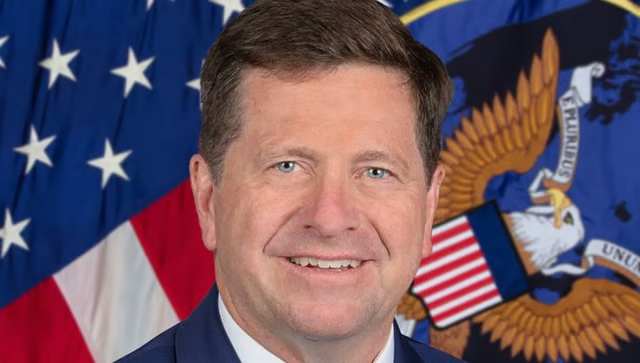
The White House is giving its new AI task force 120 days to examine the risks of increasingly powerful AI systems without slowing America’s push to lead the technology race.
Led by Director of National Intelligence Jay Clayton, the Super Intelligence Force formally adopted its charter at its first official meeting on Oct. 15, setting up a review of AI risks, reporting procedures and government oversight.
The initiative comes as advanced AI systems raise concerns about cyberattacks, biological threats and unexpected behavior, while the Trump administration seeks to avoid rules that could slow American AI companies.
The task force will commission a report from the President’s Council of Advisers on Science and Technology covering three areas: cybersecurity and critical infrastructure, biosecurity and dual-use applications, and model control and accountability, according to Semafor.
The group will also review how AI companies notify the government about security breaches, hacks, jailbreaks and other incidents. Defense Undersecretary Emil Michael will lead work on developing reporting protocols and coordinating with advanced AI labs.
The White House has not established a new regulatory framework through this initial meeting. Instead, the task force will examine existing government powers and consider recommendations for improving the response to AI-related threats, Reuters reported.
Who will shape the government’s AI response?
Clayton will lead the task force alongside three vice chairs: Defense Undersecretary Emil Michael, Office of Personnel Management Director Scott Kupor and Federal Trade Commission Chair Andrew Ferguson.
Michael will focus on incident reporting and coordination with AI developers. Kupor will work with critical infrastructure providers and assess AI’s economic and employment effects, while Ferguson will oversee law enforcement and consumer protection issues.
Other senior administration officials will participate, with former Secretary of State Condoleezza Rice and venture capitalist David Sacks expected to provide external advice, according to The Wall Street Journal.
The task force will also coordinate implementation of the White House Accord on Super Intelligence, a voluntary agreement signed by major AI executives.
The task force’s authority is still uncertain. A White House official told Semafor that export controls could potentially be used to encourage cooperation from AI companies, although no such enforcement measure has been formally announced.
Clayton also said AI-related wrongdoing could be handled through existing FTC or Justice Department enforcement powers, Reuters reported.The government has yet to explain exactly which incidents companies must report, how quickly they must do so or what penalties could follow a failure to comply.
Voluntary safety pledges face a practical test
The task force’s approach presents a challenge for AI companies: They may be asked to disclose problems with their own systems while competing to release increasingly capable products.
Voluntary commitments can encourage faster cooperation, particularly when companies have technical expertise the government lacks. But without clear reporting standards and credible consequences, companies could interpret their obligations differently or hesitate to disclose incidents that threaten their reputations.
The 120-day review could help establish common expectations across the industry. However, its value will depend on whether the resulting recommendations lead to consistent reporting procedures and a clearer division of responsibility between AI developers and government agencies.
More must-read AI coverage
- SS&C Intralinks DealCentre AI vs. Datasite: Which platform is built for the future of dealmaking?
- SS&C Intralinks FundCentre AI vs. Juniper Square: Which platform better supports modern private markets fund managers?
- Why Data, Not Models, Determines AI Success
- The Rise of the AI-Native Factory: How Physical AI Is Transforming Manufacturing
What this means for AI users and businesses
For consumers, the review could eventually improve protections against AI systems that behave unpredictably, misuse personal information or enable fraud. Businesses deploying AI tools may also face new expectations around incident reporting, security testing and oversight if the government develops formal protocols.
Companies operating critical infrastructure, including energy, transportation and emergency services, have particular reasons to watch the process because failures involving AI could affect essential operations.
For now, users and businesses should not assume the task force has introduced new legal obligations or that existing AI risks have been resolved. Its first meeting established a plan for reviewing those problems, not a completed safety framework.
Other news: Eight US states have sued OpenAI, alleging that ChatGPT endangers children, encourages harmful behavior, and misleads users about its safety protections.