


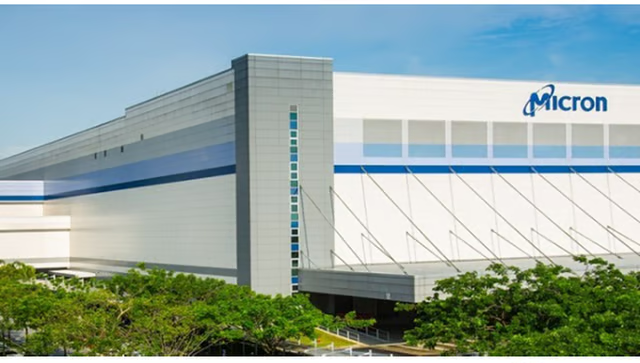
Memory supply is already tight, and Micron expects the squeeze to get worse before it gets better.
Micron Technology expects demand for memory and storage to outstrip supply throughout 2027 and 2028, extending pressure that is already contributing to higher component costs across PCs, servers and other electronics.
“We expect memory and storage supply-demand conditions to be much tighter in calendar 2027 and 2028 than they were in 2026,” CEO Sanjay Mehrotra said in prepared remarks for the company’s fiscal fourth-quarter earnings call.
More than 75% of Micron’s planned fiscal 2027 output is already committed, while most new customer discussions have shifted to 2028 volumes. For businesses planning hardware refreshes, that raises the prospect of elevated prices and tighter configuration choices lasting well beyond the current shortage.
The shortage is being driven heavily by artificial intelligence. Memory makers are directing more manufacturing capacity toward high-bandwidth memory (HBM), which is used alongside AI processors, leaving less capacity for conventional DRAM used in servers, PCs and mobile devices.
AI is changing the memory math
The problem is not simply that AI companies are buying more chips. HBM also consumes more manufacturing capacity than conventional DRAM, and newer HBM generations require additional resources.
Micron President and COO Manish Bhatia said HBM is growing faster than commodity DRAM and that the “trade ratio” rises as manufacturers move from HBM3E to HBM4 and HBM4E, according to Chosun Biz. That creates a difficult supply equation: even when manufacturers increase overall memory output, a larger share can be absorbed by AI infrastructure before it reaches traditional device markets.
Micron expects industry DRAM bit shipments to grow in the low-20% range in 2027 and 2028, while NAND bit shipments could rise in the mid-20% range. The company nevertheless expects both markets to remain supply constrained.
New factories won’t bring immediate relief
Micron is investing heavily in additional production capacity, but new clean rooms will not instantly translate into more chips.
“Even after they are built, even after first wafer output, production ramps up only gradually in the clean rooms,” Mehrotra said.
Micron expects new facilities and additional equipment to add supply from 2027 onward, while much of its construction spending is aimed at capacity that will become useful after 2028. That timing helps explain why the company does not have a clear date for when supply and demand will return to balance.
What this means for PCs and devices
Consumers are already seeing the effects. Micron exited its Crucial consumer memory business as AI-driven data-center demand increased, while higher memory costs have contributed to more expensive PCs and lower memory configurations.
The pressure is also reaching enterprise hardware. Trendforce reported in July that some cloud providers and OEMs have shifted from larger server memory modules to smaller configurations as prices rise.
For IT departments, persistent shortages could complicate refresh planning. Businesses may face a choice between paying more for higher-memory configurations, accepting lower specifications, or extending the life of existing systems.
Extending refresh cycles may make sense for less critical machines, but delaying upgrades for systems running memory-intensive workloads can create its own costs through lower performance, higher support needs and aging hardware.
What's hot at TechRepublic
- Blackpoint Cyber vs. Arctic Wolf: Which MDR Solution is Right for You?
- Why AWS Sellers Choose Deepgram Over Other Voice AI Tools
- SS&C Intralinks DealCentre AI vs. Datasite: Which platform is built for the future of dealmaking?
- SS&C Intralinks FundCentre AI vs. Juniper Square: Which platform better supports modern private markets fund managers?
- Verito vs. Rightworks: Which IT Provider Is Best for Your Firm?
The bigger constraint is capacity, not just chips
Micron’s outlook suggests the memory squeeze may be harder to resolve than a normal supply shortage because manufacturers are effectively competing against two forms of demand at once: rapidly expanding AI infrastructure and the existing market for conventional computing devices.
For businesses, that makes memory another component worth considering earlier in hardware planning rather than treating it as a predictable commodity purchase.
Prices and availability could still change as manufacturers add capacity and demand shifts. But Micron’s forecast suggests IT buyers should not assume that cheaper, more plentiful memory will return in the next product cycle. Planning refreshes around realistic memory costs and configuration availability may remain necessary through 2028.
Other news: Indonesia ordered a temporary halt to BDx Data Centers’ planned 640MW AI campus in West Java until the company secures required building permits and completes its environmental assessment.