


Picture this: You and your team have spent a tremendous amount of time, money, and effort to develop a piece of software, only to have the client say, “It is not what we need.”
Imagine the frustration and disappointment! You can avoid scenarios like this by applying the software development life cycle (SDLC) to your project.
SDLC is a structured framework that guides the entire software development process. Adopting this framework helps teams deliver high-quality software that meets client requirements — on time and within budget.
What are the phases of the SDLC?
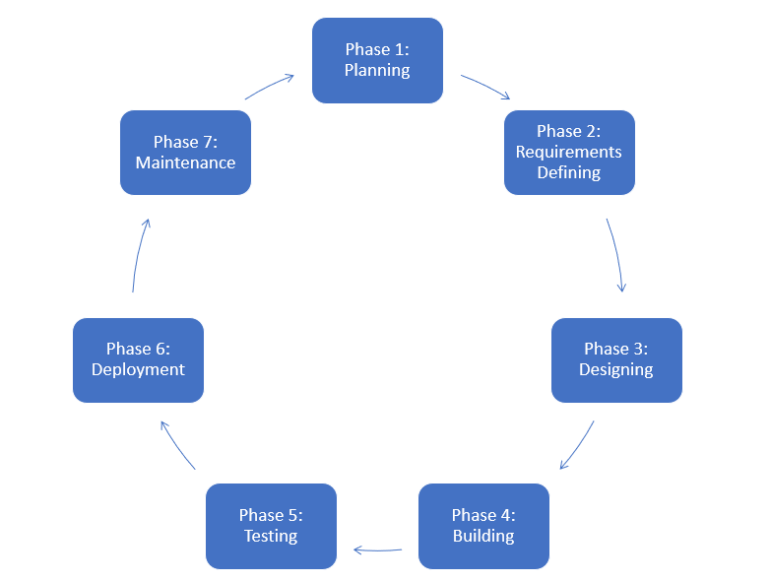
Phase 1: Planning
During the planning phase, the team determines the project’s scope and requirements — all of which must align with stakeholders’ or clients’ expectations. At the end of this phase, the team should have a plan that details the project’s objectives, goals, timeline, budget, and resources.
Key deliverables/objectives: Project plan, clearly defined goals, resource requirements, budget estimate, and schedule estimate
Read more: Project Plan Examples: How to Write an Effective Plan
Phase 2: Requirements defining
This phase focuses on defining and analyzing the software requirements.
These requirements may originate from users, clients, market research, or other stakeholders. The team compiles them into a document known as the software requirements specification (SRS), which serves as the primary reference for software specifications throughout the life cycle.
Key deliverables/objectives: Software requirements specification document
Read more: Best Requirements Management Tools and Software
Phase 3: Designing
Based on the requirements outlined in the SRS, the software designers develop the system’s overall architecture.
They may propose several options, all detailed in the software design document (SDD). The SDD is then reviewed by the project team and stakeholders, and the most suitable design is selected for further development.
Key deliverables/objectives: Software design document and design selection
Phase 4: Building
Hands-on development, building, and coding occur in this phase.
Programmers and developers create the software according to the design chosen in the previous phase. They use various programming languages and tools to develop the software through to completion.
Key deliverables/objectives: A working piece of software
Phase 5: Testing
During the testing phase, the software developed in the previous stage undergoes a thorough evaluation to ensure it functions correctly and meets user requirements.
This step typically begins by defining test parameters in accordance with the software requirements. The team conducts a series of rigorous tests, including unit testing, integration testing, security testing, system testing, and acceptance testing, to detect any bugs or glitches.
When all parameters are satisfied, the testing phase is considered complete. All activities and outcomes during this stage must be properly documented.
Key deliverables/objectives: Thorough testing records and a final product that satisfies all requirements
Read more: How to improve your application testing system
Phase 6: Deployment
Once fully tested, the software is shipped to end users, marking the transition from the project phase to the production phase.
Note that it is still the project team’s responsibility to ensure users can operate the software with ease; this may involve providing training, simulations, and user manuals to support a smooth adoption process.
Key deliverables/objectives: A finished product deployed to all end users
Phase 7: Maintenance
The software development life cycle does not end with delivery. A finished product also requires proper maintenance and, potentially, continuous improvement — this is the focus of the seventh phase.
The maintenance stage involves adapting to an ever-changing environment by responding to user feedback, resolving new bugs, and updating the software to meet evolving requirements. Customer support also plays a vital role, providing users with guidance and assistance to earn their trust and foster long-term loyalty.
Finally, a long-term vision for the software needs to be established. This may involve releasing newer versions or even developing an entirely new product.
Key deliverables/objectives: A maintenance plan to ensure the product’s long-term viability
How to measure success in SDLC?
These are several key points to measure success in SDLC:
Stakeholder satisfaction
One of the most crucial aspects in software development is meeting the requirements set by stakeholders (including end users, clients, project sponsors, etc.). The software and user interface should align with their needs and expectations.
Proper SDLC implementation ensures that the goals of all key parties are identified and documented early in the project. This helps prevent misunderstandings or conflicts at the conclusion, when resources, time, and effort have already been invested.
Read more: Understanding Different Types of Stakeholders and Their Roles
Budget and schedule
A successful project not only satisfies user requirements but also delivers the product within the agreed timeline and the budget set during the planning phase. A project may not be considered successful if it runs over budget or is completed too late.
The software development life cycle helps keep the project on schedule and within budget by clearly defining the scope, requirements, design, and testing, minimizing the possibility of rework.
Read more: How to Deal with Project Cost Overruns (+ Prevention Tips)
Product quality
A high-quality product should perform as intended, be easy to use, contain minimal or no errors, and have proper security measures in place. While every phase of the SDLC contributes to delivering a valuable end result, the testing phase plays a crucial role by evaluating key quality parameters.
Read more: How to Plan Quality Management in Projects
Benchmarking
Considered a crucial part of the software development life cycle, benchmarking, or benchmark testing, involves comparing performance test results against performance metrics. The goal is to measure actual performance and determine whether any changes are needed.
A globally recognized benchmarking method is based on ISO/IEC 19761:2011, which defines software project performance using the COSMIC Software Sizing Standard. It measures productivity based on COSMIC Function Point (CFP).
Several measurements in this benchmarking are:
- Developer productivity, measured in CFP per sprint
- Team productivity, measured in CFP per sprint
- Defect potentials, measured in defects per CFP
- Project schedule, measured in CFP per month
- Project value, measured in payback period per CFP
Read more: 5 tips for measuring developer productivity
What are the different models in SDLC?
There are six common models used in SDLC: Waterfall, Agile, Iterative, V-Model, DevOps, and Spiral.
The following table contains a description of each model, its pros and cons, and the best use case.
| Model Name | Description | Pros | Cons | Best use |
|---|---|---|---|---|
| Waterfall | A classic model that emphasizes completing one phase before moving to another. In Waterfall, each phase cannot overlap. |
|
| Large project with predictable requirements and outcome |
| Agile | The project is divided into smaller incremental parts. Each part is developed in iterations within a two- to four-week sprint. Requirements are reviewed in every sprint. |
|
| Large and complex project with rapidly changing requirements |
| Iterative | The team works on each phase until completion, and the end product undergoes reviews. If there are any changes in the requirements, the team repeats the process from the beginning until they achieve a satisfactory final product. |
|
| Small and complex project with poorly defined scope and unclear requirements |
| V-Model | Also called Verification and Validation, the V-Model is similar to the Waterfall approach, except there is a verification and testing step before moving to the next phase. |
|
| Large and complex project with poorly defined scope and unclear requirements |
| DevOps | DevOps combines development (Dev) and operations (Ops) so that the operation is able to start while the project is still ongoing. |
|
| Large and complex project with modular requirements |
| Spiral | This model combines elements of Iterative and Waterfall. The project team develops the product from the initial phase through to market delivery. After release, the product undergoes further review before being updated and released as a newer version. |
|
| Small and complex project with rapidly changing requirements |
Learn more:
- DevOps vs Agile: What’s the Difference?
- What Is Scrum? Methodology Overview for Project Management
- What Is Hybrid Project Management?
- Complete Guide to Project Management Methodologies
Does security matter in software development?
Security and compliance are crucial in a software development project. Those two aspects must be considered throughout all phases, from initiation through completion.
Best Project Management Software
- Best Free Project Management Software
- Best Project Management Software for Small Businesses
- Best Project Management Software for Mac Users
- Best Marketing Project Management Software
- Best Project Management Software for Startups
- Best Project Management Software for Engineers
What is the SSDLC?
The secure software development life cycle (SSDLC) ensures that products of software development projects are built with security as the top priority. Here are the key principles of SSDLC:
- Security by design: It is critical to consider security from the start of the project, which means it must be thoroughly discussed during the planning stage.
- Continuous monitoring: Ongoing checks must be conducted throughout all phases of the project. It is not a one-off activity but rather a continuous effort throughout the development process.
- Risk assessment: It is imperative to identify potential security threats and vulnerabilities in the project, followed by appropriate risk mitigation efforts.
- Education and training: Everyone involved in the project, especially developers, must be aware of the security risks associated with the product. Education and training are necessary to raise awareness and align understanding of the risks.
- Collaboration: Security is everyone’s responsibility. Developers, operations, and security specialists need to work together to reach the common goal of ensuring proper security measures are in place for the project.
SDLC compliance requirements
Besides security, software development projects must also adhere to industry-specific regulations and standards. Several important aspects that require compliance are:
- Legal and regulatory requirements: Some critical regulations to follow include the General Data Protection Regulation (GDPR) and the Health Insurance Portability and Accountability Act (HIPAA).
- Ethical considerations: Beyond legal regulations, ethics are also crucial. These pertain to user privacy, data protection, and the prevention of discrimination.
- Internal processes: Some companies have internal processes or procedures that need compliance.
How to spot, quantify, and fix technical debt in SDLC
Technical debt is the long-term consequences of short-term compromises and shortcuts made while completing a software development project. It is a quick fix that temporarily pushes progress forward, but more often than not, it creates more problems later in the project.
How can I identify technical debt?
Technical debt is hard to spot, but there are some warning signs:
- When the software becomes problematic because the developers lack insight into the codebase
- When there are bugs that are difficult to fix because of code complexity or a lack of documentation
- When fixing bugs creates more issues or results in continuous performance degradation
How can I quantify technical debt?
- Complexity metrics: Measuring the program’s complexity, such as by using Cyclomatic Complexity, to indicate areas for simplification
- Technical debt ratio: Calculated by dividing the cost of fixing technical debt by the total cost of development. This ratio represents the proportion of resources needed to pay off the accumulated debt.
- Code churn: Measuring the amount of code changed over a period of time. This metric may indicate code that is frequently modified and may be prone to accumulating debt.
5 best tools to measure technical debt
- vFunction: Leverages AI to track architectural debt in a large and complex system. It identifies hidden potential risks and suggests ways to address them.
- CAST Imaging: Comprehensively assesses technical debt, code quality, architecture, and security vulnerabilities. It provides a detailed view of the technical debt landscape, helping the team prioritize fixes on the most critical areas of debt.
- SonarQube: An open-source platform that offers a code quality and security analysis tool. It provides insights into code smells, bugs, vulnerabilities, and code duplication, which often indicate technical debt.
- Snyk Code: Identifies issues like potential bugs, security vulnerabilities, and code complexities, which are often intertwined with technical debt.
- CodeScene: Analyzes areas of the code that frequently change and are more at risk of accumulating technical debt. It also provides behavioral code analysis, such as team dynamics and knowledge distribution, to identify potential bottlenecks and risks.
FAQs
How do I choose the right SDLC model?
As shown in Table 1, the right SDLC model for your project depends on several factors, including complexity, size, and potential for requirement changes. In addition, some models are more commonly suitable for certain industries.
For example, agile may suit startups better, as they need to release products to the market quickly with limited budgets. Industries with rigid regulations, such as healthcare or fintech, may find the Waterfall or V-model more suitable.
Where do DevOps and DevSecOps fit into SDLC?
DevSecOps is an evolution of DevOps that incorporates security from the beginning. In DevOps, security often only comes to mind in later stages. In DevSecOps, security is embedded from the initial phase throughout the process.
How long does a complete software development life cycle usually take?
The duration of a complete SDLC varies significantly. Its length depends on many factors, including project size, complexity, requirements, and team experience.
On average, a single SDLC takes around 4–9 months. A simple software project, such as a minimum viable product (MVP), may be completed in as little as 4 weeks, while a complex project may take up to 12 months.