
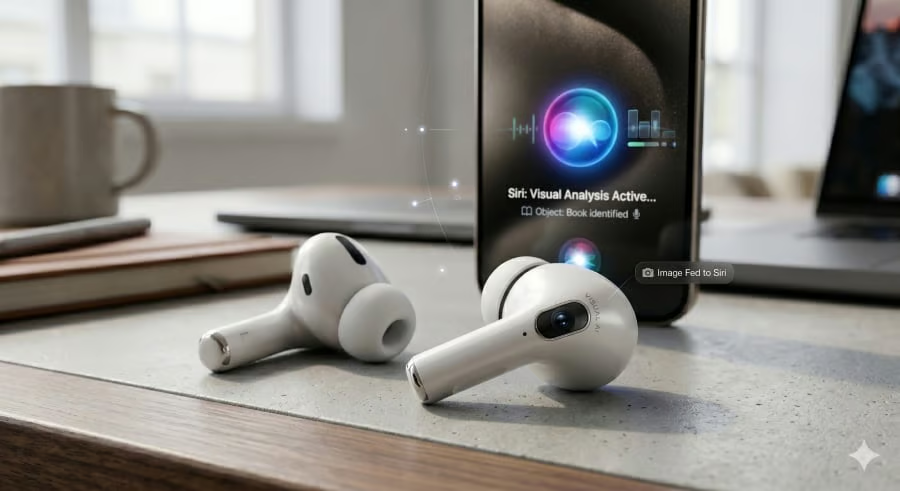


AirPods may soon give Siri a new way to see the world around their wearers.
Apple is reportedly considering launching camera-equipped AirPods before the end of 2026, according to Bloomberg’s Mark Gurman. References to the device, internally known as B790, have also appeared in iOS 27 beta code, suggesting the hardware is moving closer to release.
Apple has not announced the product, and a September debut remains unconfirmed. If it arrives, however, the device could turn AirPods from primarily audio accessories into hands-free interfaces for Apple’s Visual Intelligence features.
How the AirPods cameras could work
Unlike traditional cameras, the sensors in these AirPods are not expected to focus on taking photos or recording video.
Instead, the cameras would act as visual sensors that give Siri more awareness of the user’s surroundings. The idea is to make Apple’s assistant more useful by allowing it to understand context, such as what a user is looking at or what is happening nearby.
Reports suggest the technology would connect with Apple’s Visual Intelligence features, bringing AI capabilities closer to the user through a familiar wearable device. The move fits into Apple’s broader AI wearable strategy, which reportedly includes future smart glasses and a wearable AI device.
Why this could change the AirPods business
Camera-equipped AirPods would represent a major shift for Apple’s popular earbuds. Since their launch, AirPods have mainly focused on audio, communication and health-related features. Adding AI-powered vision could turn them into a more active computing device.
The move could also help Apple compete in the growing AI wearable market, where companies are exploring devices that can understand the world around users without requiring a phone screen. For consumers, the appeal would be convenience: asking Siri questions while getting answers based on what is actually happening nearby.
However, Apple will have to solve several challenges before this becomes mainstream. Adding cameras could increase the size and weight of AirPods, potentially affecting comfort and fit. Users may also question how the cameras work, when they activate and whether people nearby can tell when they are being analyzed.
Wearable cameras have already raised privacy concerns across the industry. Devices such as smart glasses have faced criticism over fears that people could be recorded without their knowledge.
Several reports suggest Apple is aware of those concerns and may include a visible indicator showing when the cameras are active. Still, convincing users and the public that camera AirPods are designed for AI assistance rather than surveillance will be critical.
If Apple launches the product alongside its next iPhone lineup in September, it could mark one of the company’s biggest changes to AirPods since their introduction.
Read more: Apple’s reported hardware leasing program could give customers a new way to upgrade to the latest iPhones and other devices.