


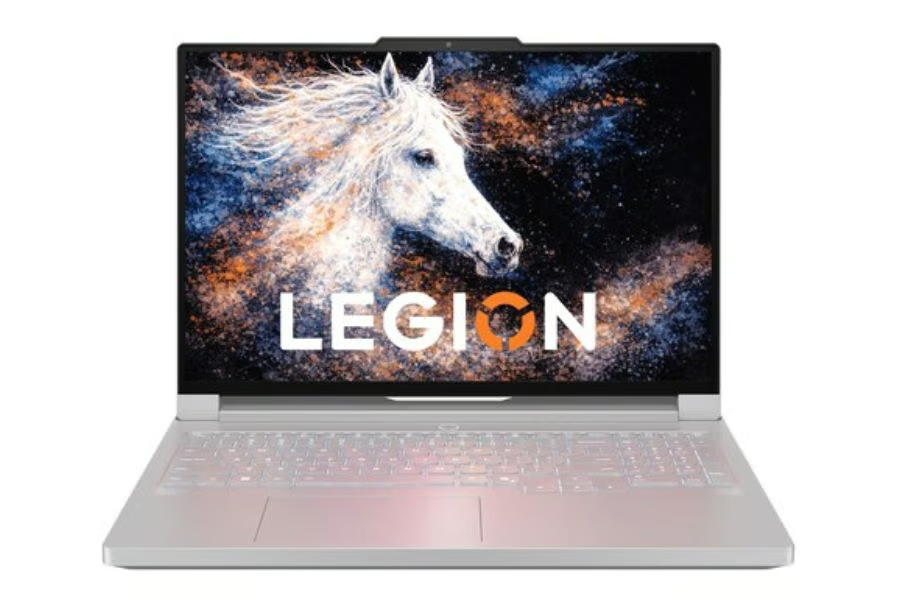
Lenovo has introduced the Legion R9000P, the first laptop to ship with an inkjet-printed OLED display, using a panel supplied by TCL CSOT.
The launch marks the first commercial use of TCL CSOT’s inkjet-printed OLED technology in a laptop, bringing the display technology out of years of development and into a mainstream consumer product.
The 16-inch gaming laptop features a 240Hz OLED display with more than 99% DCI-P3 color gamut coverage. TCL CSOT said the panel also uses a Real RGB Stripe subpixel layout instead of the triangular layouts found on many OLED displays, a design intended to improve text sharpness and reduce color fringing.
Unlike conventional OLED panels, which are manufactured using a vacuum thermal evaporation (VTE) process, inkjet printing deposits organic light-emitting materials directly onto the display substrate. TCL CSOT said the approach eliminates the need for expensive vacuum equipment and fine metal masks, simplifying production and reducing manufacturing costs.
The company added that the process maintains OLED’s key advantages, including high contrast and strong color performance.
This isn’t the industry’s first swing at inkjet-printed OLED. Japanese display maker JOLED tried commercializing the same idea starting in 2017 and went bankrupt in 2023 after it couldn’t scale production profitably, Tech Times reported.
TCL CSOT is betting that a bigger factory fixes that problem: its current Wuhan facility opened in November 2024, and a much larger plant in Guangzhou, built to handle much larger glass sheets, isn’t expected to reach full mass production until late 2027.
Pricing remains the biggest unanswered question
Although the display technology could eventually reduce production costs, Lenovo has not disclosed pricing, full hardware specifications, or availability for the Legion R9000P.
That leaves open the question of whether manufacturing savings will translate into lower retail prices. Existing gaming laptops already offer 240Hz OLED panels, making the manufacturing process — not the display specifications — the product’s biggest differentiator.
The Legion R9000P arrives just days after MSI introduced a desktop monitor using the same display technology, suggesting inkjet-printed OLED is beginning to move beyond prototype and industrial applications into mainstream consumer products.
What's hot at TechRepublic
- Blackpoint Cyber vs. Arctic Wolf: Which MDR Solution is Right for You?
- Why AWS Sellers Choose Deepgram Over Other Voice AI Tools
- SS&C Intralinks DealCentre AI vs. Datasite: Which platform is built for the future of dealmaking?
- SS&C Intralinks FundCentre AI vs. Juniper Square: Which platform better supports modern private markets fund managers?
- Verito vs. Rightworks: Which IT Provider Is Best for Your Firm?
What this launch signals for the display market
The Legion R9000P matters less for its specifications than for validating a new manufacturing process in a commercial laptop.
If inkjet-printed OLED scales as TCL CSOT expects, it could eventually reduce panel production costs and increase competition in the premium display market. That may benefit laptop and monitor buyers over time, but those gains remain theoretical until manufacturers begin shipping products at lower prices.
For now, the Legion R9000P serves as an early proof point rather than a clear value play. Without confirmed pricing or independent reviews, buyers cannot yet determine whether inkjet-printed OLED delivers meaningful advantages over today’s mature OLED gaming laptops.
The broader impact will depend on whether Lenovo, and eventually other PC makers, can turn manufacturing efficiencies into lower prices without compromising display quality.
Also read: OpenAI is reportedly developing a screenless AI speaker with cameras, sensors, and moving parts for home use.