


As AI makes fake online identities harder to spot, Facebook is asking users to prove they’re human with a video selfie.
Meta has launched Facebook Verified, a free identity verification system that compares a user’s video selfie with existing profile photos before issuing a badge confirming the account belongs to a real person. The company says the feature is intended to help users distinguish accounts used by humans from those controlled by scammers and impersonators using generative AI.
The verification badge is separate from the paid Meta Verified subscription and instead focuses on improving trust across Facebook interactions. The move comes as social platforms face growing pressure to combat scams, impersonation, and AI-generated accounts.
Why Facebook is adding human verification
The rise of generative AI has changed a long-standing challenge facing social media platforms. Instead of relying solely on moderation systems to detect fake accounts, companies are increasingly seeking ways to verify that legitimate users are, in fact, human.
Meta’s new Facebook Verified program reflects that shift and creates an additional hurdle for scammers, impersonators, and AI-generated personas that rely on fabricated identities to interact with Facebook users.
How Facebook’s video-selfie check works
The verification process begins with a short video selfie rather than a government-issued ID or a one-time photo upload. Facebook says it compares the video with the user’s existing profile photos to determine whether the same individual appears in both before deciding whether to award the badge. Meta did not disclose the specific technology used for the comparison process.
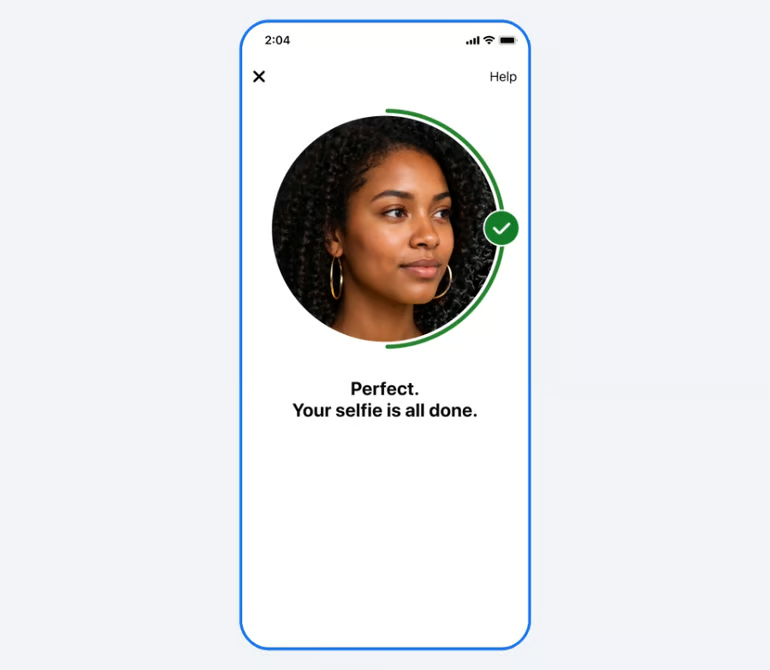
Unlike the subscription-based verification checkmark, the new Facebook Verified badge serves as a free authenticity marker for eligible users aged 18 and older. Meta also says the feature will be available to users whose accounts meet Facebook’s community standards, particularly those related to fraud. Plus, the feature is rolling out gradually across supported markets, although Meta did not specify which markets are included in the initial rollout.
Facebook Pages and Professional Mode accounts are ineligible for the service, per Meta’s announcement. That exclusion raises questions about how much impact the feature will have if bad actors shift activity to Pages or Professional Mode accounts.
Facebook also says that verified users will initially have their badges shown on their profile, in Facebook Dating, and on Marketplace. Over time, the badge will also appear across feeds.
What's hot at TechRepublic
- Blackpoint Cyber vs. Arctic Wolf: Which MDR Solution is Right for You?
- Why AWS Sellers Choose Deepgram Over Other Voice AI Tools
- SS&C Intralinks DealCentre AI vs. Datasite: Which platform is built for the future of dealmaking?
- SS&C Intralinks FundCentre AI vs. Juniper Square: Which platform better supports modern private markets fund managers?
- Verito vs. Rightworks: Which IT Provider Is Best for Your Firm?
Privacy concerns looming ahead
Meta’s latest verification system reflects a difficult balance the company may now face. Users want stronger protection against AI-powered scams and impersonation, but achieving that increasingly requires Facebook to collect more personal information to prove who is behind an account.
That trade-off is likely to fuel privacy discussions as Facebook Verified expands.
While Meta frames the feature as a way to improve trust and reduce fraud, its long-term acceptance may depend not only on how accurately it verifies users, but also on how transparently Facebook handles the video selfies and related identity data collected during the process. The rollout may renew scrutiny of Meta’s handling of biometric and identity-related data, given the company’s history of privacy controversies.
Also read: Meta’s expanded enhanced protections for teen users across Instagram, Facebook, and Messenger.