


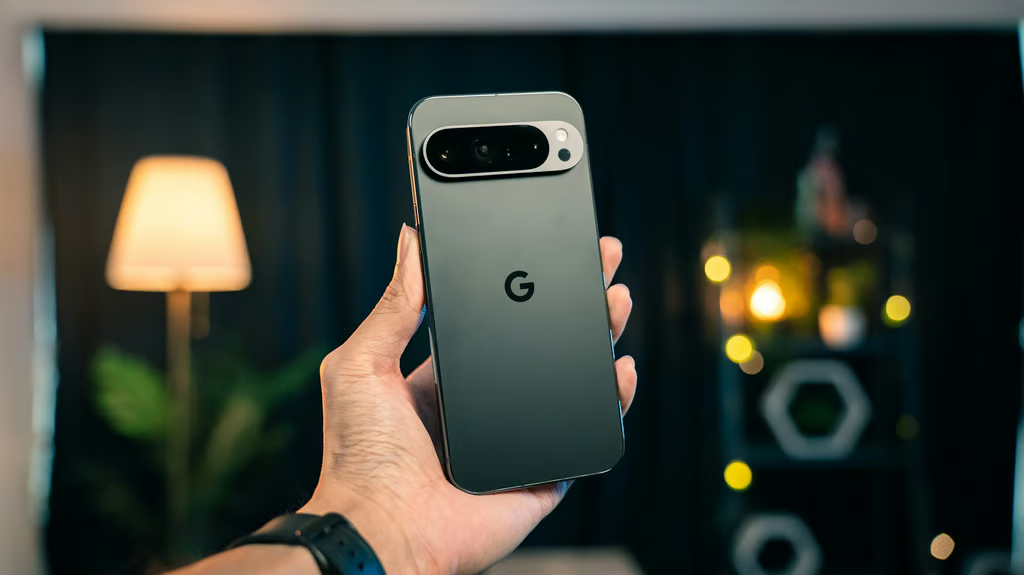
Google raised the US starting price of its 128GB Pixel 10a from $499 to $599 on Oct. 2, adding $100 to the cost of its mid-range smartphone.
This follows a price increase across the entire Pixel 11 series, which added $100 to the cost of all four models. Google previously said the memory shortage would also affect ‘in-market Pixel phones,’ although it did not specify which models or when their prices would change
At $599, Google may find it harder to market the Pixel 10a as an affordable option for customers, although it is still $300 cheaper than the standard Pixel 11. The price hike was first reported by 9to5Google.
It is not the first piece of Google hardware to see a price increase. Its TV Streamer 4K went from $100 to $150, with higher component costs cited as the reason.
Google not the only manufacturer under cost pressure
The increase came one day after Samsung raised US prices across its Galaxy S26 series by $100. Apple increased the price of the iPhone 18 Pro and Pro Max compared to the previous generation, and has also raised prices on other products, including the iPad and Mac, this year.
The rapid expansion of AI data centers is increasing demand for memory and putting pressure on consumer-device supplies. Manufacturers are allocating more capacity to high-bandwidth memory for AI systems, tightening availability for conventional DRAM used in phones and PCs.
It seems unlikely that the memory crunch will end any time soon, with Micron warning it could last through to 2028. Micron is expanding production, but says new facilities take time to ramp up and that it cannot yet identify when supply and demand will return to balance.
Hardware manufacturers are also looking at other ways to ease the pressure, including partnering with the fourth-largest memory manufacturer, China’s CXMT. Apple has reportedly looked into this, although the US government has warned against such a move.
The $500 premium smartphone category is disappearing
Several hardware manufacturers have been targeting the roughly $500 mid-range smartphone market, but the memory shortage may be putting pressure on that category.
Alongside the Pixel 10a, the Galaxy A57 had its price increased by $100 to $599, while the Motorola Edge went from $549 to $599. Even cheaper models, such as the Nothing Phone 4a Pro and Moto G Stylus, have increased to $499.
For businesses planning a phone refresh, the Pixel increase means revisiting device budgets and supplier quotes. A 100-device purchase would cost an additional $10,000 before taxes or discounts. Buyers should compare equivalent storage configurations, security-update coverage, and device-management compatibility when assessing alternatives.
Read more: As smartphone prices rise, compare Samsung and Google’s software support to understand how security updates and support lifetimes affect long-term value.