


A long-running chapter of T-Mobile’s pricing history is coming to an end, and for some customers, the next bill may look very different.
T-Mobile is preparing to retire more than 1,100 legacy plan codes and automatically move affected customers onto its current mobile plans, according to CNET.
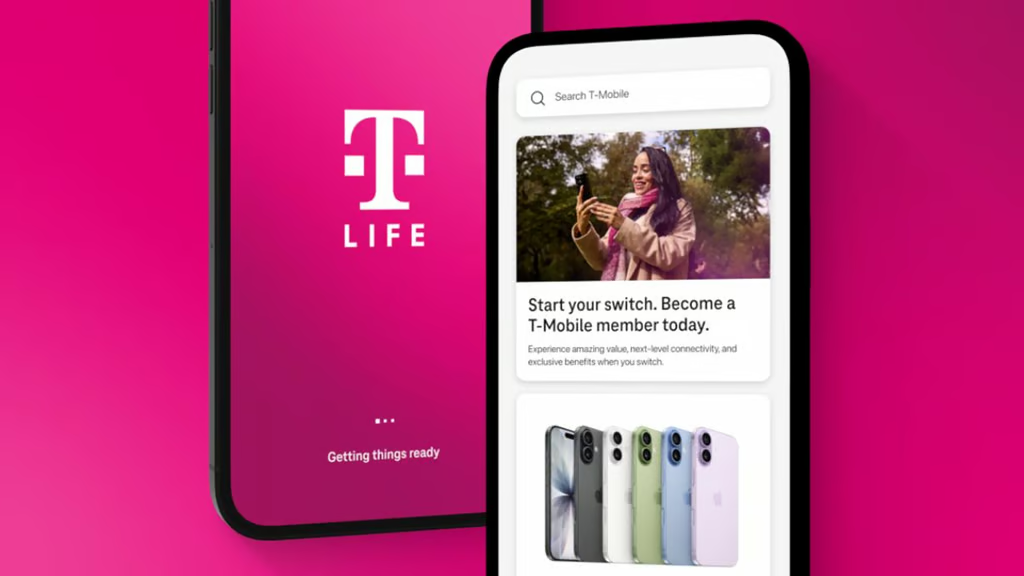
The change could affect plans dating back 10 to 15 years, including older offerings such as Simple Choice, T-Mobile One, One Plus, Magenta-era plans, and even grandfathered Sprint plans carried over after the 2020 merger. Customers will be notified by text message or through the T-Life app, with the migration expected to roll out over the next few billing cycles.
No opt-in required
What makes this move unusual is not just the scale, but the lack of choice. T-Mobile’s chief marketing officer Allan Samson said in a briefing last week that “absolutely nothing is required of the customer, and it just is going to happen.”
That means subscribers will be automatically placed onto comparable modern plans without needing to approve the switch. If customers don’t like the assigned plan, their only options are to pick another T-Mobile plan or leave the carrier entirely.
Why T-Mobile says it’s doing this
T-Mobile is presenting the move as part of a broader plan modernization effort.
“We’re retiring our oldest plans, some of which were built nearly 15 years ago — in the 3G and 4G eras, and well before our 5G network was fully deployed,” a T-Mobile representative told TechRepublic in a statement. “Customers will transition to modern plans that provide access to America’s best wireless technology, enhanced features and a 5-year price guarantee for peace of mind.”
The representative said some customers will see no change to their monthly bill, while others will see “a modest adjustment.” Every customer moved to a new plan will keep their current benefits while gaining improvements in network and service experiences, the representative added.
Internally, the company describes the decision as a systems cleanup rather than a pricing push. According to an internal email from Chief Operating Officer Jon Freier, the retirement of legacy plans removes over 1,100 billing codes. He wrote that “simplifying the plan mix means even more resources and focus on delivering the outstanding experience we’re known for,” CNET reported.
Samson also defended the shift by pointing to how network usage has changed, saying today’s users stream high-definition video and rely heavily on mobile data. T-Mobile says its current plans better reflect today’s usage patterns and service needs, including expanded 5G access and international roaming.
What customers can expect
Reports suggest price increases of around $4 per line for some users, depending on the plan they are moved to. Others may see little or no change.
T-Mobile says customers will be migrated to current offerings such as Essentials, Essentials Saver, Experience More, Experience Beyond, and similar tiers. The company also claims that in many cases, even if prices rise, customers will still pay less than the standard rate for those same plans today.
Business and industry impact
This move places T-Mobile in line with broader telecom behavior, but with a more aggressive execution.
Competitors like AT&T and Verizon have pushed legacy users toward newer plans, but typically through incentives or fee adjustments rather than forced migrations. T-Mobile’s approach stands out because it removes customer choice entirely.
Financially, the strategy could increase average revenue per user (ARPU) while reducing the complexity of maintaining outdated billing systems. The change may also improve operational efficiency while reshaping T-Mobile’s revenue structure.
What it means for consumers
For customers, the implications are mixed. On the upside, newer plans may offer better features such as stronger 5G performance, more hotspot data, and improved roaming options.
On the downside, legacy customers who intentionally stayed on older, cheaper plans could face unavoidable price increases or loss of long-held benefits. The biggest concern is predictability: customers won’t be choosing the change, and plan comparisons may be difficult until migration notices arrive.
What's hot at TechRepublic
- Blackpoint Cyber vs. Arctic Wolf: Which MDR Solution is Right for You?
- Why AWS Sellers Choose Deepgram Over Other Voice AI Tools
- SS&C Intralinks DealCentre AI vs. Datasite: Which platform is built for the future of dealmaking?
- SS&C Intralinks FundCentre AI vs. Juniper Square: Which platform better supports modern private markets fund managers?
- Verito vs. Rightworks: Which IT Provider Is Best for Your Firm?
Risks, tradeoffs, and what to watch
There are a few key risks in the rollout:
- Customer dissatisfaction: Automatic upgrades may push some users to competitors.
- Billing confusion: Plan equivalency is not always transparent.
- Support strain: T-Mobile expects higher customer service demand during the transition.
- Reputation impact: Long-term loyalty perception could be affected.
At the same time, T-Mobile is betting that improved features and modernized plans will offset any frustration.
T-Mobile is framing the move as a way to simplify its systems and give customers access to newer plan features. But for legacy subscribers, the tradeoff is control. Customers who kept older plans for price, perks, or predictability may now have to decide whether the new T-Mobile plan still works for them.
Also read: SpaceX is reportedly exploring a Starlink mobile service that could put new pressure on Verizon, AT&T, and T-Mobile.