
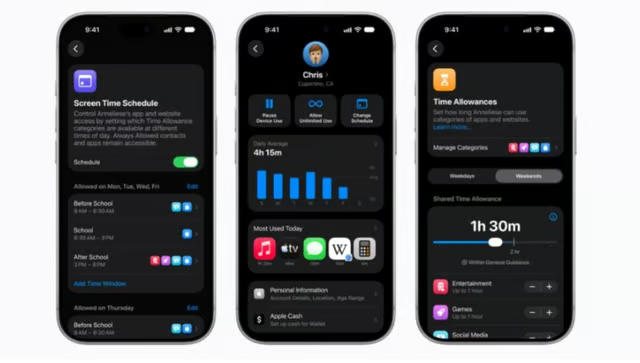


Apple is giving parents more control over what their children can access — and making kids ask before crossing some of those boundaries.
New child-safety features are rolling out with iOS 27, iPadOS 27 and macOS 27, including website approval requests, expanded Communication Safety protections and new controls for managing screen time and setting up Child Accounts. Apple first previewed the changes at WWDC in June.
The headline feature is Ask to Browse. It works like Apple’s existing Ask to Buy system, which already routes app downloads and purchases to a parent for approval, except now it applies to websites. If a child tries to visit a new site in Safari, the request gets sent to a parent’s phone before it loads.
Apple has also widened Communication Safety, the tool that already flagged nudity in shared photos and videos. It now catches gore and violent content too, and the protection extends into live FaceTime calls, not just images sent through Messages.
Apple adds age-based Time Allowances
Rather than a flat daily limit, Screen Time now uses “Time Allowances” — age-based budgets split across categories like Social Media, Entertainment and Games. Apple built the starting points with input from child health experts, including the American Academy of Pediatrics, though parents can adjust them freely.
The company is also working with the AAP to turn its Family Media Plan into a reference guide for parents.
Setting up a new Child Account is simpler too. Parents now choose from a small starter set of apps, a recommended bundle, or a fully custom list, rather than handing over a device loaded with everything at once. Everything runs through Apple’s Child Account system, required for kids under 13 and usable up to age 18.
Older Apple devices could complicate the rollout
There’s one catch that could trip up families: every device in a Family Sharing group, including an old Apple Watch or a spare iPad, has to be updated to the matching software before the new Screen Time system will work at all. Apple also warns that some features may not be available in every region, language, or model.
Must-read Apple coverage
- Nearly 7 in 10 iPhone Owners Plan iPhone 17 Upgrade
- Apple Prepares AI-Powered Siri Upgrade With Google Search Integration
- Apple’s Xcode 26 Beta Now Supports GPT-5 and Claude
- Apple’s Vision Pro Adoption Stalled As Content Released ‘Drip by Drip’
Why this rollout looks different
What sets this update apart from past parental-control tweaks is the shift in default posture. Instead of giving kids full access and letting parents claw it back, Apple now defaults to restriction and makes expansion a deliberate act.
This closed-by-default model mirrors how workplaces handle app permissions, not how consumer tech has traditionally treated teenagers.
That’s a meaningful shift for an industry that’s spent years under pressure from regulators and parent groups over kids’ online safety, and it puts pressure on Google and other platforms to match the approach.
For families, the tradeoff is between control and convenience. More approval points can prevent unwanted access, but they can also mean more interruptions for both children and parents.
Because some features depend on compatible software across a family’s Apple devices, parents should check their hardware and update status before assuming every new control will be available immediately.
Other news: Apple has rebuilt parts of iOS 27 specifically for the $1,999 iPhone Duo, adding fold-aware app layouts, Split View multitasking, dual Home Screens, a vertical Dynamic Island, and an expanded StandBy mode.