
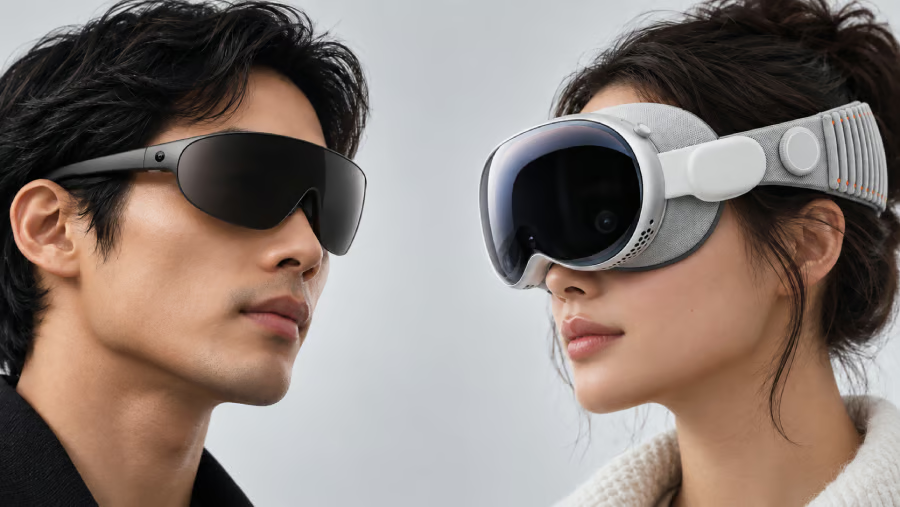


Apple Vision Pro and Meta VR Glasses both promise a large virtual workspace, but the hardware is built very differently. Vision Pro keeps most of its components in the headset, while Meta moves much of the processing and battery into a separate puck to keep the glasses lighter.
The bigger difference for buyers is availability and price. The M5 Vision Pro is already on sale for $3,499, while Meta VR Glasses are expected in spring 2027 for $1,299.99. So the choice is really between a more established device you can buy now and a much cheaper option that still needs broader real-world testing.
- Apple Vision Pro vs Meta VR Glasses: Key differences
- Meta costs about $2,200 less and weighs far less
- Vision Pro has the productivity advantage today
- Meta starts with a stronger VR gaming ecosystem
- Display and battery specs are closer than the prices suggest
- How we compared them
- Is Meta VR Glasses worth the wait?
Apple Vision Pro vs Meta VR Glasses: Key differences
Apple says the current Vision Pro weighs 750 to 800 grams and uses a 23 million-pixel micro-OLED display with refresh rates up to 120Hz. Meta puts its VR Glasses at about 100 grams, with 37 pixels per degree, a 70-degree horizontal field of view, Snapdragon XR2 Gen 3, and 12GB of memory.
Meta costs about $2,200 less and weighs far less
Price is Meta’s clearest advantage. Vision Pro with M5 starts at $3,499 in the US, while Meta plans to sell VR Glasses for $1,299.99 when they launch in spring 2027.
Weight is another major difference between the two devices. Instead of putting the battery and processors inside the glasses, Meta moves them into a separate compute puck that can sit in a pocket or bag. That leaves roughly 100 grams in the glasses, compared with 750 to 800 grams for the Vision Pro headset. Both devices also have separate components to carry: Meta’s compute puck and Apple’s battery.
Meta says the glasses will support multiple virtual screens, immersive sports, 3D movies, Xbox Cloud Gaming, and more than 75 hand-controlled games at launch.
Early hands-on impressions are encouraging. Road to VR found the larger size comfortable during a roughly 30-minute demo, although the smaller version felt tight and slipped on the reviewer’s nose. A short demo cannot answer how the glasses will feel after several hours, but Meta’s lighter design is an obvious advantage on paper.
Vision Pro has the productivity advantage today
Vision Pro has something Meta cannot offer yet: a mature product that people can already use for work.
Mac Virtual Display lets Vision Pro users create a large private workspace tied to a Mac, while visionOS supports spatial apps alongside Apple’s wider software ecosystem. Apple has also continued updating the platform through 2026.
Meta is targeting similar uses. VR Glasses will support multiple virtual displays and DisplayPort input from Macs, Windows PCs, and consoles. Meta also says users can turn a flat surface into a keyboard and touchpad.
For someone whose main goal is replacing monitors or working inside a headset, however, Vision Pro is the more certain choice for Mac users today because Mac Virtual Display is available now. Meta’s announced workspace features still need testing on shipping hardware.
Meta starts with a stronger VR gaming ecosystem
Vision Pro’s gaming options have improved, including support for conventional controllers and PlayStation VR2 Sense controllers.
Meta still has the deeper VR foundation. VR Glasses run Meta Horizon OS, connect to the same broader ecosystem as Quest, support PC VR, and can use Touch Plus controllers for games that need more traditional motion tracking. Controllers will not be included by default.
For existing Quest users, Meta VR Glasses may be the more familiar option, particularly with optional Touch Plus controllers. Buyers should also weigh their narrower 70-degree horizontal field of view against Quest 3’s 110 degrees. Vision Pro remains better suited to buyers who care more about Mac integration, immersive media, and Apple’s ecosystem than VR gaming.
Must-read Apple coverage
- Nearly 7 in 10 iPhone Owners Plan iPhone 17 Upgrade
- Apple Prepares AI-Powered Siri Upgrade With Google Search Integration
- Apple’s Xcode 26 Beta Now Supports GPT-5 and Claude
- Apple’s Vision Pro Adoption Stalled As Content Released ‘Drip by Drip’
Display and battery specs are closer than the prices suggest
Both products use micro-OLED displays and support refresh rates up to 120Hz, but their display specifications are not directly comparable.
Vision Pro has 23 million pixels across its two displays. Meta lists 2,412 x 2,288 pixels per eye and 37 pixels per degree, but its horizontal field of view is 70 degrees. Road to VR found the display sharp but said the narrower field of view was noticeable compared with larger VR headsets.
Both companies cite up to three hours of video or media playback, but Meta has not published a comparable general-use figure for the glasses. Apple rates Vision Pro for up to 2.5 hours of general use or three hours of video playback. Forbes, after testing the current Vision Pro for more than two months, found Apple’s estimates broadly accurate.
Meta currently claims up to about three hours of media playback. Because retail units are not available yet, that figure still needs long-term independent testing.
How we compared them
We compared US pricing, official specifications, and announced features from Apple and Meta, then checked those claims against recent hands-on testing where available.
Meta VR Glasses will not ship until spring 2027, so its battery life, comfort, and productivity experience are still based on company claims and short demos rather than long-term use. Vision Pro has been available long enough for those areas to be tested more thoroughly.
Is Meta VR Glasses worth the wait?
If you need a spatial-computing headset today, Vision Pro is the only one of the two you can actually buy. It makes the most sense for people who already rely on Macs and want a device with established software, display performance, and productivity features. The trade-offs are the $3,499 price and much heavier design.
Meta VR Glasses are more appealing if price, weight, and VR gaming matter more. At $1,299.99, they cost about $2,200 less and put far less weight on your face. They also build on Meta’s existing VR ecosystem. The catch is that they will not ship until spring 2027, so long-term comfort, battery life, and productivity still need proper testing.
A quick way to decide:
- Buy Vision Pro now if you need the hardware today and Mac productivity is your priority.
- Wait for Meta VR Glasses if the lower price, lighter design, and VR gaming support matter more and you are comfortable waiting until 2027.
If the goal is a virtual workspace, decide first which computer you need to connect and whether you need the device before spring 2027. Vision Pro offers a Mac workflow you can try now; before buying Meta VR Glasses, look for full reviews of text readability, fit during long sessions, input controls, and battery life during work rather than video playback.
Read our breakdown of Meta’s $1,299 VR Glasses, including its AI controls, eye tracking, and virtual workspace features.