



Google may have accidentally shown what Android could look like on a full-size PC.
A newly surfaced bug report, briefly available on Google Issue Tracker, appeared to include screen recordings of an early desktop-style Android interface codenamed Aluminium OS.
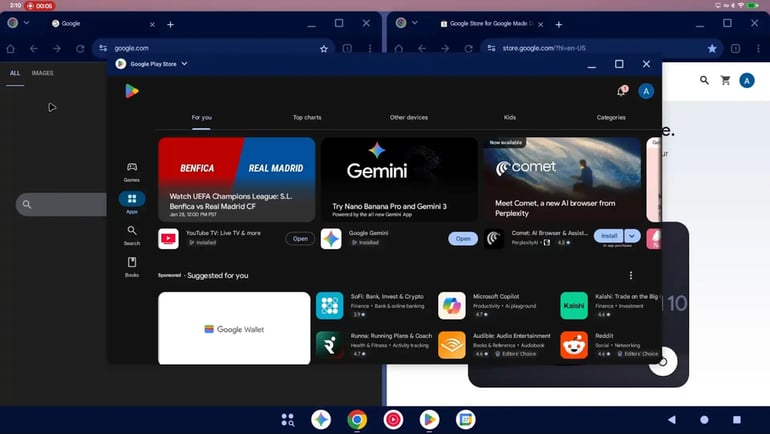
The footage, first spotted by Android-focused outlet 9to5Google, suggests Google is testing Android 16 in an environment that looks more like ChromeOS, complete with multitasking, desktop window controls, and a PC-friendly status bar.
While unconfirmed, the leak adds fresh evidence that Google’s Android and ChromeOS worlds may be moving closer together.
Leaked bug report offers first look
The Chrome-related bug report was uploaded with two screen recordings taken from a device running Aluminium OS. Google later restricted access to the report, but not before the footage was pulled externally.
The leak is likely the first real glimpse of Google’s Android-on-desktop effort, noting that the report was discovered on Google’s Issue Tracker before permissions were locked down.
The screenshots and description reference Chrome Incognito tabs and include build details pointing to Android 16 running in a desktop-like mode.
Aluminium OS looks like Android and ChromeOS combined
According to 9to5Google, the bug report included screenshots indicating the device used was an HP Elite Dragonfly 13.5 Chromebook with the board codename “Brya (Redrix),” running a 12th-generation Intel Core (Alder Lake-U) processor. The report also referenced the build number ZL1A.260119.001.A1 and identified the software as an Android 16-based build tied to Aluminium OS, Google’s desktop Android project.
Aluminium OS is the kind of hybrid users might expect, with a ChromeOS-like taskbar paired with a top status bar that used standard Android icons for battery, Wi-Fi, and other system controls. The footage offered only a brief glimpse of the experience, including split-screen multitasking and a quick look at the Play Store.
9to5Google reported that several desktop-oriented changes stood out, including a taller status bar optimized for large screens. “The Google Chrome interface mostly aligns with the current large-screen Android version except for the Extensions button, which is currently only available on the desktop browser,” 9to5Google noted.
The outlet added that the window controls in the leaked build, including minimize, fullscreen, and close buttons, appeared closer to ChromeOS than what users currently see on Android tablets.
More Google coverage
- New Google Search AI Mode is ‘Total Reimagining,’ Says CEO Sundar Pichai
- In Major Ruling, Judge Finds Google ‘Willfully Acquired and Maintained Monopoly Power’ Over Digital Ad Market
- Google’s Big Bet on Nuclear Energy: ‘The Race to Power AI-Driven Data Centers is Accelerating’
- Computer History Museum Releases Original AlexNet Code: Why It Matters
What Android for PC could mean for enterprise users
Google’s plan for Aluminium OS remains unclear. The company has not confirmed whether it will release this as part of Android, ChromeOS, or only for certain Chromebooks. Still, the leak reinforces Google’s direction to bring Android apps and workflows into more traditional PCs.
For tech leaders, this could change how they approach app deployment and what to expect from lightweight laptops and mobile devices. As with many early internal builds, leaked features may look different down the line, arrive much later, or never ship at all.
Read our latest coverage on an Android leak, including early Android 17 interface changes.