


Blood pressure cuffs usually come out for a reading, then disappear into a drawer. Huawei wants its latest one to stay on your wrist.
The Huawei Watch D3 is reaching the UK and more European markets after its debut in Munich earlier this month. Its strap contains an inflatable airbag that tightens around the wrist to take blood pressure readings without a separate cuff.
The idea is not new to Huawei, but D3 puts the feature into a slimmer watch while supporting both individual checks and day-and-night ambulatory blood pressure monitoring.
An inflatable airbag takes the reading
Inside the strap is a mechanical airbag and pressure sensor. D3 uses the oscillometric method, detecting changes in pressure as the airbag inflates around the wrist. Users get systolic and diastolic readings without attaching a separate cuff for each check.
Scheduled measurements can also run across a full day and night through 24-hour ambulatory blood pressure monitoring, or ABPM. Huawei Health can turn those readings into a report users can share with a doctor. D3 also carries CE certification under European medical-device rules for its blood pressure function.
A physical cuff puts D3 in a different category from some smartwatch health alerts. Samsung Galaxy Watch blood pressure tracking depends on calibration with an upper-arm cuff, for example. Apple’s hypertension feature looks for patterns associated with high blood pressure instead of producing an on-demand cuff reading.
D3 trims down Huawei’s earlier cuff watch
Huawei’s earlier Watch D2 could also run 24-hour blood pressure monitoring. D3 changes the physical package around that feature.
| Feature | Watch D2 | Watch D3 |
|---|---|---|
| Body thickness | 13.3 mm | 11.3 mm |
| Display | 1.82 inches | 1.92 inches |
| Strap width | 26.5 mm | 25.5 mm |
| Mechanical airbag width | 26.5 mm | 25.5 mm |
Huawei also says the D3 strap is 7.5 g lighter than the one on D2, although it does not publish the individual strap weights.
That matters more during all-day monitoring, when the watch and inflatable strap remain on the wrist for hours at a time.
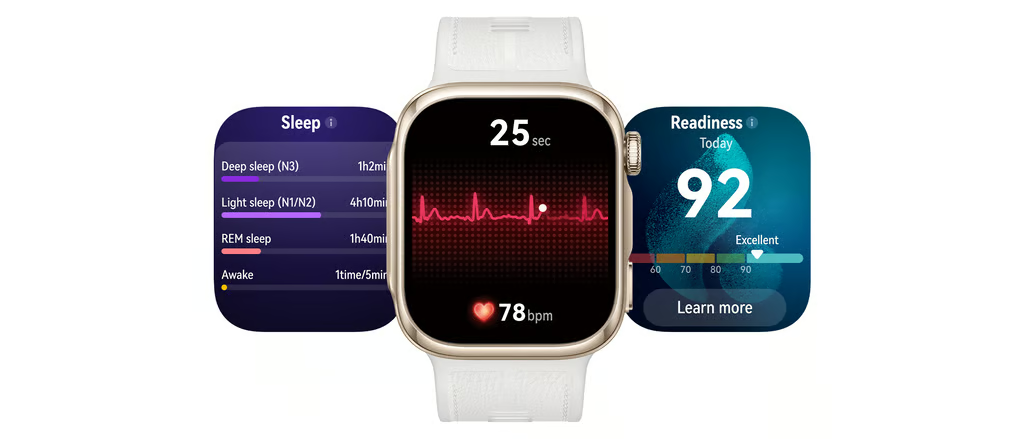
Blood pressure checks also extend into exercise. D3 can take readings before and after supported workouts and alert users to elevated measurements before exercise. ECG and sleep tracking remain alongside Bluetooth calling, so the cuff does not turn D3 into a single-purpose device.
ABPM also changes the charging routine. Battery life drops to about one day with the feature running, compared with up to six days under typical use, so starting with a charged watch is a good precaution.
UK pricing starts at £399.99 through Huawei’s store, with German and Austrian listings at €449.
All-day wear changes the blood pressure routine
If your clinician wants blood pressure readings outside the exam room, D3 can keep those checks on your wrist. UK NICE hypertension guidance recommends ambulatory monitoring to confirm suspected hypertension after elevated clinic readings. Out-of-office measurements can also help when clinic and home readings do not match.
Wearing the monitor on your wrist does not remove the need to take each reading properly, though. Huawei instructs users to keep the wrist level with the heart and remain still during standard measurements. Wrist size counts too, with supported circumference running from 13 to 21 cm.
If blood pressure is your main reason for considering D3, ask what you actually need from the watch. Occasional home checks may not justify wearing an inflating cuff throughout the day. Someone asked to collect day-and-night readings has a more direct use for the feature.
Before relying on its reports, ask your clinician whether watch-generated readings fit the monitoring plan they want you to follow.
Huawei also warns users not to change medication or treat watch data as a diagnosis. The value of having more blood pressure readings ultimately depends on whether they are taken correctly and interpreted in the right clinical context.
More on wearable tech: Compare the best Whoop alternatives from Garmin, Oura, Fitbit, Amazfit, and Polar for sleep, recovery, fitness, battery life, and value.