


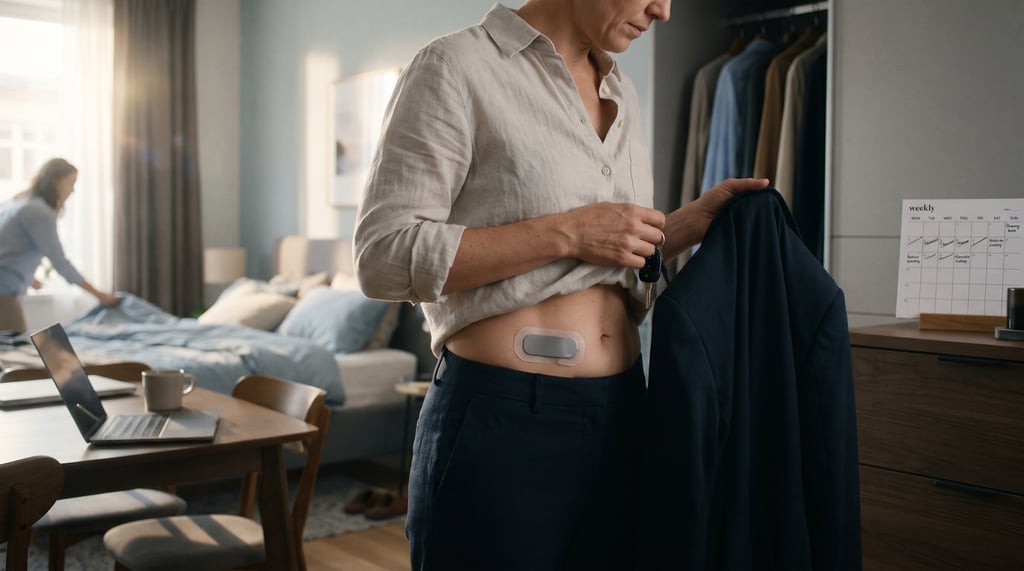
Three meals a day can mean three insulin injections. Multiply that by seven days, and that’s up to 21 encounters with a needle every week. A newly upgraded wearable patch could make that routine a little less demanding.
Medical technology company CeQur announced Nov. 10 that its updated Simplicity insulin patch is now available nationwide in the US. Designed for adults who need mealtime insulin, the device can be worn for up to seven days, delivering prescribed doses with the press of two buttons instead of repeated needle injections.
That’s potentially 21 fewer shots to prepare, whether at home, at work, or on the go. The patch doesn’t eliminate the need to manage insulin doses, but it could make one of the more repetitive parts of diabetes care a little simpler.
A button-operated system delivers insulin beneath the skin
CeQur Simplicity is a disposable patch filled with prescribed rapid-acting insulin. An inserter places a small, flexible tube called a cannula beneath the skin, allowing users to administer doses by pressing two buttons without preparing another syringe or pen.
Unlike sensor-connected insulin pumps, the device operates mechanically without batteries or software. It also does not measure blood sugar like wearable glucose monitors.
According to the manufacturer, the updated patch introduces several improvements over its predecessor.
| Feature | Previous patch | Updated patch |
|---|---|---|
| Wear duration | Up to 4 days | Up to 7 days |
| Dosing increments | 2 units | 1-unit or 2-unit versions |
| Insulin capacity | 200 units | 240 units |
Replacing three mealtime injections daily for seven days produces the company’s maximum estimate of 21 avoided shots. Actual wear time depends on insulin consumption.
Available by prescription, Simplicity supports adults older than 21 with type 1 or type 2 diabetes who use U-100 Humalog or NovoLog for mealtime insulin.
Patient surveys and clinical trials examine insulin delivery outcomes
A new CeQur/Harris Poll survey of 409 US adults using pens or syringes for mealtime insulin found several difficulties with their treatment routines.
- 51% reported missing or skipping insulin doses.
- 52% said they did not always carry insulin supplies when leaving home.
- 70% of respondents who had missed doses and answered the public-setting question said they had missed a dose because they were in public.
Previous research also examined how wearable insulin delivery compares with conventional injections. A 2019 randomized trial involving 278 adults with type 2 diabetes tested an earlier three-day patch against insulin pens.
After 24 weeks, average HbA1c levels, which measure longer-term blood sugar control, fell by 1.7 percentage points among patch users and 1.6 points among pen users. Researchers found no significant difference in adverse events, although participants using the patch reported greater satisfaction with their treatment.
A weeklong insulin patch could reduce interruptions at work
Working adults who take insulin during long shifts or between meetings could benefit from a device that allows them to administer doses without preparing an injection in public.
Keeping medication accessible throughout the day could also reduce interruptions during travel, when finding a suitable place to inject may be inconvenient.
Patients would still need to calculate their prescribed doses and maintain accurate administration records. Even people who receive glucose readings on a smartwatch must manage insulin delivery separately, since the patch cannot respond automatically to those measurements. Any prescribed background insulin treatment also remains necessary.
Before switching, patients should discuss the available dosing increments, insulin capacity, and suitability of the device with their healthcare professional.
They should also confirm insurance coverage, prescription requirements, and how to manage situations such as early insulin depletion or patch detachment.
For existing Simplicity users, the longer wear time applies to the updated device rather than older four-day patches. Patients should confirm the appropriate product and replacement schedule before making any changes.
The updated patch could make mealtime insulin delivery more convenient, but its value will depend on how well it fits each person’s treatment needs and daily routine.
Related reading: Tracking blood pressure and blood sugar is getting more convenient as Google Health introduces new logging tools and glucose charts.