


Business credit cards with balance transfer offers can be powerful financial tools when combined with a strategy. They allow business owners to move existing debt onto a card with a low or 0% introductory APR, or one with lower transfer costs, freeing up cash flow and reducing the overall cost of paying down balances.
The best business balance transfer credit cards go beyond temporary financing, combining competitive introductory offers, reasonable fees, ongoing rewards, and business management tools that continue delivering value long after the balance is paid off. That said, here are my top picks for the best business balance transfer credit cards:
| Card | Best for | Annual fee |
|---|---|---|
| U.S. Bank Triple Cash Rewards Visa® Business Card | Balance transfers with strong cash back | $0 |
| First Citizens Rewards Business Visa® Credit Card | Low balance transfer fees with ongoing rewards | $0 |
| Huntington Voice Business Credit Card | Customizable rewards and low-cost balance transfers | $0 |
| American Express Blue Business Cash™ Card | Flat-rate cash back after debt payoff | $0 |
My methodology
To choose the best business credit cards for balance transfers, I focused on cards that provide meaningful introductory APR value while continuing to offer long-term benefits after the promotional period ends. I evaluated each card using the following criteria:
- Balance transfer features: I assessed whether the card allows balance transfers and reviewed the associated fees, restrictions, and transfer terms.
- Introductory APR offer: I compared the length and value of each card’s introductory APR period to determine how much interest savings it could provide.
- Long-term borrowing costs: I considered the ongoing APR after the promotional period ends to evaluate the card’s affordability over time.
- Rewards and earning potential: I reviewed how well each card’s rewards structure aligns with common business spending categories and everyday expenses.
- Annual fees and overall value: I weighed annual fees against the card’s benefits to determine whether it offers strong value for business owners.
- Business management tools: I looked at features such as employee cards, expense tracking, reporting capabilities, and other tools that simplify account management.
- Issuer experience and account management: I evaluated whether the card issuer offers a reliable experience, strong customer support, and practical account management options for businesses.
My goal was to recommend cards that can help business owners reduce interest costs in the short term without sacrificing long-term value once the introductory offer expires.
Why you can trust TechRepublic
My knowledge spans five years as a financial professional, working in various roles within the banking industry.
I am committed to delivering expertise-led answers to your small business questions and helping you understand all things business finance.
I ensure that the best answers I provide are guided by hands-on banking knowledge, independent research, and TechRepublic’s editorial standards, which prioritize transparency, expertise, and reader value.
- Specialize in CRE, financial analysis, and banking operations
- Worked as a Credit Analyst, Loan Administrator, and Bank Teller
- Have been writing B2B finance content since 2024
Lauren McKinley
Senior Finance Writer – TechRepublic
Best business balance transfer credit cards at a glance
| Card | Best for | Ongoing rewards |
|---|---|---|
| U.S. Bank Triple Cash Rewards Visa® Business Card | Best for balance transfers with strong cash back |
|
| First Citizens Rewards Business Visa® Credit Card | Low balance transfer fees with ongoing rewards |
|
| American Express Blue Business Cash™ Card | Best for businesses paying off transferred balances quickly |
|
| Huntington Voice Business Credit Card | Customizable rewards and low-cost balance transfers |
|
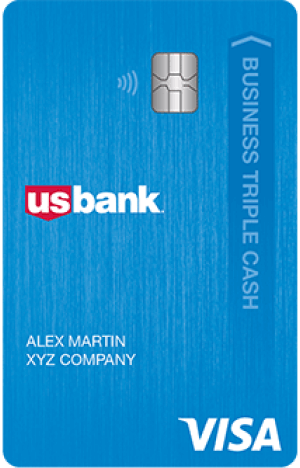
U.S. Bank Triple Cash Rewards Visa® Business Card: Best for balance transfers with strong cash back
 |
|
|---|---|
Pros
| Cons
|
Card details
Welcome offer
Rewards
Features
|
|
Why I like it
I like the U.S. Bank Triple Cash Rewards Visa® Business Card for balance transfers because it combines a 0% intro APR window with rewards that can continue to benefit your spending habits after the transfer is paid off. If you’re using a balance transfer to reduce interest costs, it helps to have a card that still earns meaningful cash back on the day-to-day expenses that you’ll keep putting on a business card, like office supplies, cell phone service, and restaurant purchases.
It also adds value through U.S. Bank’s business tools, including Spend Management and employee cards, which can help you track spending while you are trying to stay disciplined when managing your budget.
Other benefits
- Cash rewards don’t expire as long as the account remains active
- Multiple redemption options, including statement credit, deposit to a qualifying U.S. Bank account, or rewards card
- Built-in fraud protection and account alerts
Visit U.S. Bank Triple Cash Rewards Visa® Business Card
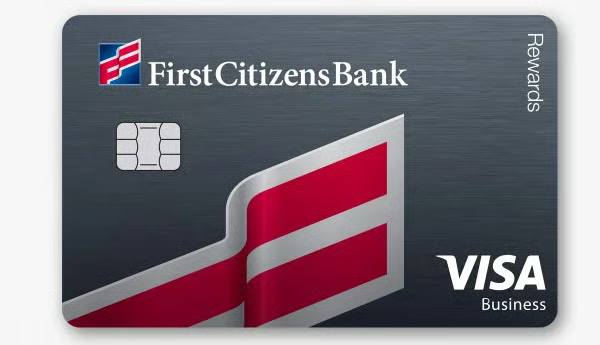
First Citizens Rewards Business Visa® Credit Card: Best for low balance transfer fees with ongoing rewards
 |
|
|---|---|
Pros
| Cons
|
Card details
Welcome offer
Rewards
Features
|
|
Visit First Citizens Rewards Business Visa® Credit Card
Why I like it
I like the First Citizens Rewards Business Visa® Credit Card because it combines a relatively low 3% balance transfer fee with ongoing rewards, making it a strong option for businesses that want to consolidate debt without giving up everyday earning potential. The 9-month 0% introductory APR period isn’t the longest available, but businesses with a realistic repayment plan can still save substantially on interest while paying down transferred balances.
This card is best suited for businesses that already bank with First Citizens or operate within its service area. Since First Citizens has a regional branch network, it may not be as accessible as cards from nationwide issuers. However, if you’re eligible, the combination of a lower transfer fee, no annual fee, and solid ongoing rewards makes it one of the better long-term balance transfer options for small businesses.
Other benefits
- No foreign transaction fees
- Redeem points for travel, cash back, gift cards, merchandise, or eligible statement credits
- Visa purchase protection and fraud monitoring
Huntington Voice Business Credit Card: Best for customizable rewards and low-cost balance transfers
 |
|
|---|---|
Pros
| Cons
|
Card details
Welcome offer
Rewards
Features
|
|
Visit the Huntington Voice Business Credit Card
Why I like it
I like the Huntington Voice Business Credit Card because it combines an introductory 0% APR on balance transfers with one of the most flexible rewards programs available for small businesses. The lower 3% balance transfer fee helps reduce the upfront cost of consolidating debt, while the ability to choose your own 4% cash back category each quarter lets you maximize rewards based on your business’s changing spending habits.
This card is best suited for businesses that operate within Huntington’s service area or already have a relationship with the bank. Unlike many national issuers, Huntington asks prospective cardholders to connect with a business banker to apply. If that’s not a hurdle for your business, this card offers an excellent combination of promotional financing, low transfer costs, and long-term rewards.
Other benefits
- No foreign transaction fees
- Late Fee Grace® benefit
- Online and mobile account management
- Flexible cash back category selection throughout the year
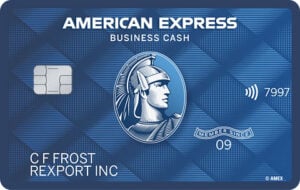
American Express Blue Business Cash™ Card: Best for businesses paying off transferred balances quickly
 |
|
|---|---|
Pros
| Cons
|
Card details
Welcome offer
Rewards
Features
|
|
Visit American Express Blue Business Cash™ Card
Why I like it
I like the American Express Blue Business Cash™ Card for businesses that don’t necessarily need a promotional balance transfer APR but still want to keep transfer costs low. Eligible balance transfers are subject to a relatively low 3% fee, making the card a reasonable choice if you expect to pay off the transferred balance quickly rather than finance it over an extended introductory period.
Where this card really stands out is after the balance is paid off. The flat 2% cash back rate on the first $50,000 in annual purchases, combined with no annual fee, makes it an easy card to keep in your wallet for everyday business spending. If your priority is finding a long-term business card that also offers balance transfer flexibility, this card is worth considering.
Other benefits
- Automatic cash back is issued as statement credits
- Employee spending limits and account management tools
- Access to Amex Offers for targeted savings
- Up to 99 employee cards available
What's hot at TechRepublic
- Blackpoint Cyber vs. Arctic Wolf: Which MDR Solution is Right for You?
- Why AWS Sellers Choose Deepgram Over Other Voice AI Tools
- SS&C Intralinks DealCentre AI vs. Datasite: Which platform is built for the future of dealmaking?
- SS&C Intralinks FundCentre AI vs. Juniper Square: Which platform better supports modern private markets fund managers?
- Verito vs. Rightworks: Which IT Provider Is Best for Your Firm?
Pros and cons of business balance transfer cards
| Lower interest costs during the introductory period | Intro APR is temporary, and regular APRs can be high |
| Improved cash flow while you pay down debt | Fees are common when initiating a balance transfer |
| Consolidation of multiple balances into one payment | Overspending can undo the benefits if you don’t stick to a budget |
How to choose the best business balance transfer card
Choosing the best business balance transfer credit card starts with understanding your debt payoff goal and how your business spends day to day. Here’s how to make the best choice:
- Know what you’re transferring and why: Start by listing the balances you want to move, figuring out the APR you’re paying now, and how quickly you realistically can pay the debt down. A balance transfer card works best when you have a clear strategy and the 0% intro APR period is long enough to execute it.
- Compare the intro APR window and transfer deadline: Balance transfer offers usually come with two timelines, the length of the 0% intro period and the number of days you have to complete the transfer after opening the account. A longer intro APR is helpful, but only if you can actually transfer the balance in time and pay it down before the promotional period ends.
- Calculate the real cost after fees: Most cards charge a balance transfer fee, often 3% to 5% of the amount you move. Before applying, estimate your interest savings and subtract the transfer fee to confirm the deal is worth it.
- Decide how you want the card to work after the transfer: If you plan to keep the card long term, make sure its ongoing rewards and perks match your spending. Flat-rate cash back is easy to manage, while category rewards can deliver more value if your costs are consistent in areas like gas, travel, or office supplies.
- Check approval requirements and business terms: Many business cards require good to excellent credit. Also, confirm any issuer restrictions, like whether transfers from the same bank are excluded, whether employee cards are available, and whether the card has the expense tracking tools for your business needs.
Frequently asked questions (FAQs)
Can I transfer a balance from another business credit card?
In most cases, yes. Many business credit card issuers allow you to transfer balances from another card, although transfers between cards issued by the same bank are typically not allowed. Be sure to review the issuer’s eligibility requirements before applying.
Are balance transfer fees worth it?
They often are if the interest savings outweigh the transfer fee. Before moving a balance, compare the one-time fee, usually 3% to 5% of the transferred amount, against the amount of interest you expect to save during the introductory period.
Will a balance transfer help my business credit?
A balance transfer can have a positive impact if it helps you lower your credit utilization and consistently make on-time payments. The effect depends on how the issuer reports your account to business credit bureaus and how responsibly you manage the new card over time.
Bottom line
The best business balance transfer credit cards can help you reduce interest costs and get control over your business debt, especially when paired with a clear payoff strategy. Focus first on the length of the intro APR period and the balance transfer fee, then choose a card you’ll still want to use once the promotional rate ends.