


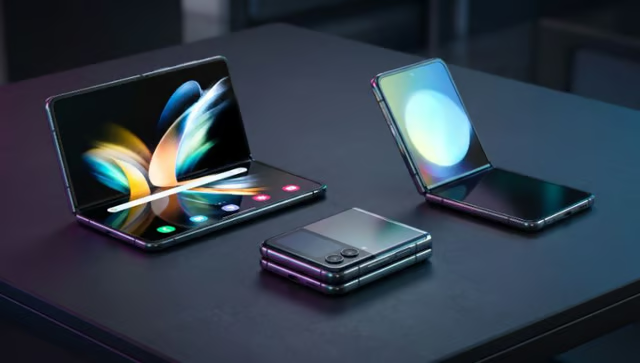
Foldable phones offer two practical benefits: more screen space for work or a smaller device to carry.
Book-style models open into larger displays for documents and multitasking, while flip phones prioritize portability. Choosing between them means weighing those benefits against price, battery life, software support, and repair costs.
These 10 models suit different needs. Before buying, consider how often you will use the folding display and whether your essential apps make effective use of it.
- Samsung Galaxy Z Fold 8: Best overall foldable
- Apple iPhone Duo: Best foldable iPhone
- Google Pixel 11 Pro Fold: Best for durability and Google software
- Honor Magic V6: Best for battery capacity and fast charging
- Motorola Razr Fold: Best for productivity and stylus use
- Samsung Galaxy Z Flip 8: Best compact flip phone
- Motorola Razr Ultra (2026): Best flip phone battery life
- Motorola Razr (2026): Best affordable foldable
- Vivo X Fold 6: Best for photography
- Samsung Galaxy Z Fold 8 Ultra: Best traditional book-style workhorse
- How we selected these phones
- What to check before buying a foldable for work
Samsung Galaxy Z Fold 8: Best overall foldable
The Samsung Galaxy Z Fold 8 makes a convincing case that a foldable phone does not have to feel awkward when closed to offer a useful tablet-sized screen when opened.
Samsung’s most important change is its shorter, wider design. Instead of the tall, narrow shape associated with earlier Galaxy Z Fold models, the Fold 8 adopts a passport-like profile. That gives its external screen a more practical shape for everyday phone tasks while making the internal display particularly suitable for watching videos, reading and browsing.
The 7.6-inch inner display has a 4:3 aspect ratio, which gives videos and other content more room to breathe. Its 5.5-inch cover screen is smaller than what some buyers might expect from a conventional flagship, but the new proportions make the device easier to carry and use.
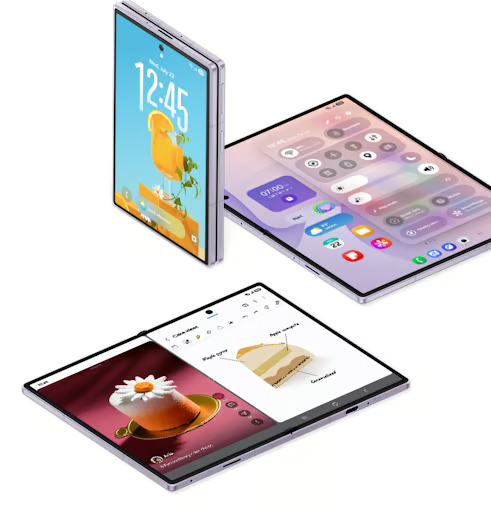
Performance is another strength. The Snapdragon 8 Elite Gen 5 for Galaxy provides flagship-level processing power, while Samsung’s One UI 9 adds multitasking features and Galaxy AI tools. The phone also benefits from Samsung’s long software support commitment.
However, the redesign does not solve every problem. The dual-camera arrangement lacks a dedicated telephoto lens, limiting its appeal to people who regularly take zoom photographs. Its unusual screen proportions can also cause problems with applications that have not been optimized for the format.
The price is another consideration. At around $1,899, the Fold 8 costs considerably more than a conventional flagship smartphone.
- Why it made the list: The Fold 8 gets the fundamentals right. Its wider design makes the cover screen more usable, while the inner display provides a genuinely useful space for entertainment and productivity.
- Who should buy it: People who want one device for everyday smartphone tasks and occasional tablet-style activities. It is particularly appealing to readers, frequent video watchers and people who work with documents on their phones.
- Who should skip it: Buyers who prioritize zoom photography, need a larger conventional cover screen or do not expect to use the inner display regularly.
Apple iPhone Duo: Best foldable iPhone
Apple’s maiden entry into the foldable space leans heavily on industrial refinement. Powered by the cutting-edge A20 Pro chipset, the iPhone Duo demolished Android rivals across synthetic processing benchmarks in PCMag’s testing. Its passport-style build opens to reveal a 7.6-inch 120Hz OLED display treated with an anti-reflective nanotexture coating that dramatically cuts glare and helps make the physical hinge crease almost invisible.
Hardware resilience is a major highlight. Alongside the Pixel 11 Pro Fold, the iPhone Duo achieves an industry-leading IP68 dust-and-water protection rating. Battery longevity is equally stellar: PCMag recorded 18 hours and 15 minutes of endurance from its 4,883mAh cell. Testing also confirms support for Apple Pencil input on the expansive inner canvas.
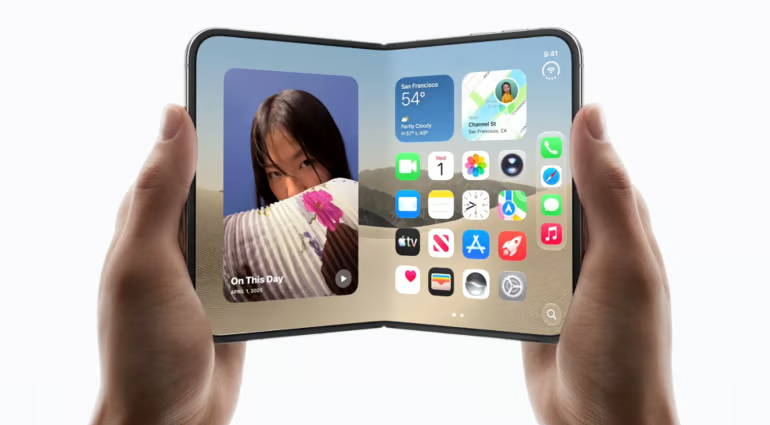
However, entering the flexible space brought uncharacteristic stumbles for Cupertino. Early production units sparked durability concerns among users over hinge-related panel cracks, earning scrutiny from users. The phone is also undeniably thick (11.3mm folded) and hefty at 254 grams. Its dual 48MP rear cameras lack a dedicated telephoto camera, although Apple provides a sensor-based 2x optical-quality zoom mode. The $1,999 starting price is another consideration.
- Why it made the list: The Duo brings Apple’s software, performance and ecosystem into the foldable category. It also offers a compelling large-screen experience for people who already rely on iPhones, Macs and other Apple products.
- Who should buy it: iPhone users who want a larger screen without leaving Apple’s ecosystem, as well as early adopters interested in Apple’s first foldable design.
- Who should skip it: Buyers who want the best value, need a dedicated zoom camera or are uncomfortable paying a premium for a first-generation device with unresolved durability questions.
Google Pixel 11 Pro Fold: Best for durability and Google software
Google’s fourth-generation foldable doubles down on everyday survivability. Earning full IP68 certification alongside a redesigned hinge mechanism engineered to endure years of daily folding, the Pixel 11 Pro Fold is widely cited across reviews as the safest, most durable foldable on the market for handling dirt and moisture.
The photography experience remains a category benchmark. Backed by Google’s computational photography, its triple rear camera array (48MP main, 10.5MP ultrawide, and a dedicated telephoto) consistently captures natural colors, balanced exposures, and dependable low-light portraits. It also introduces Qi2 magnetic wireless charging, giving it compatibility with magnetic pucks and stands.
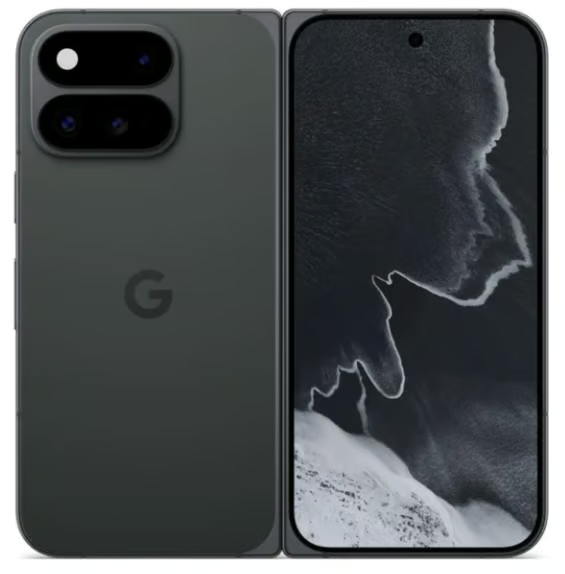
On the other side of the ledger, Google’s in-house Tensor G6 processor trails significantly behind Snapdragon and Apple silicon in raw benchmark speed and sustained 3D gaming tasks. Its 4,750mAh battery clocked the lowest endurance among flagship book foldables in PCMag’s testing (14 hours and 21 minutes), and its 258-gram chassis carries noticeable heft in casual pocket carry.
- Why it made the list: The Pixel 11 Pro Fold combines a useful cover screen, a large inner display and IP68 protection. It is a strong option for buyers who want the foldable experience without giving up Google’s software and AI features.
- Who should buy it: People who prioritize durability, prefer Google’s Android interface or want a large screen for reading and watching videos. It is also worth considering for buyers who frequently use AI-assisted photography and productivity tools.
- Who should skip it: Gamers and performance-focused users may prefer a foldable with a faster processor. Buyers who prioritize long battery life should also compare alternatives.
Honor Magic V6: Best for battery capacity and fast charging
The Honor Magic V6 shows how much battery technology has improved in the foldable category.
Its 6,660mAh silicon-carbon battery is unusually large for a device this thin. Honor has managed to combine that capacity with a body measuring around 4mm when unfolded, giving users a large screen without the bulky design often associated with foldable phones.
The phone also offers strong hardware elsewhere. Its Snapdragon 8 Elite Gen 5 processor handles demanding applications and multitasking, while its 7.95-inch inner display provides ample room for entertainment and productivity. The external screen is also large enough to make everyday tasks comfortable. Charging is another strength. The Magic V6 supports 80W wired and 66W wireless charging, making it a particularly attractive option for people who regularly need to replenish their batteries quickly.
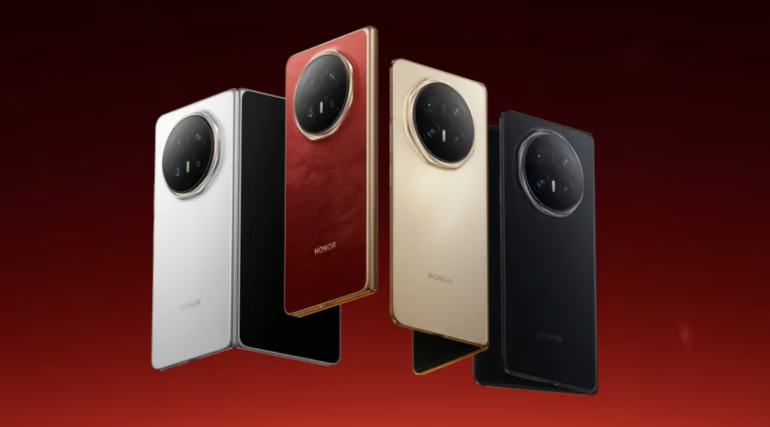
Its camera system includes a 50-megapixel main sensor, a 64-megapixel telephoto camera and a 50-megapixel ultrawide camera. The combination provides flexibility, although its photography performance is not universally considered the best in the category.
Software is the main concern. MagicOS 10 includes multitasking and AI features, but reviewers have described its interface as less intuitive than Samsung’s or Google’s software. Its battery optimization can also be aggressive.
- Why it made the list: The Magic V6 combines a large battery, slim design, fast charging and flagship processing power. It is one of the strongest answers to the question of whether a foldable can deliver dependable all-day endurance.
- Who should buy it: People who spend long hours using their phones, travel frequently or want a large-screen foldable without constantly searching for a charger.
- Who should skip it: Buyers who prefer clean, straightforward software may find MagicOS frustrating. People who prioritize the most polished camera experience should compare it with the Pixel and Vivo alternatives.
Motorola Razr Fold: Best for productivity and stylus use
Motorola built its reputation in the foldable market around flip phones. The Motorola Razr Fold represents a more ambitious move into the larger book-style category.
Its 8.1-inch inner display provides room for multitasking, while the 6.6-inch external screen offers a more conventional smartphone experience. The phone also includes stylus support, giving it an advantage over several competing foldables that have abandoned pen-based input.
That matters for people who use their phones to take handwritten notes, sketch ideas or mark up documents. The compatible Moto Pen Ultra supports handwriting and document annotation. Pen inclusion varies by market and offer, so check the bundle before buying.
Motorola has equipped the device with a 6,000mAh silicon-carbon battery and support for 80W wired and 50W wireless charging. Those features help it compete with larger foldables on endurance and charging convenience. Its software is another positive. Motorola’s Android interface is relatively straightforward, and its multitasking features make good use of the large internal display.
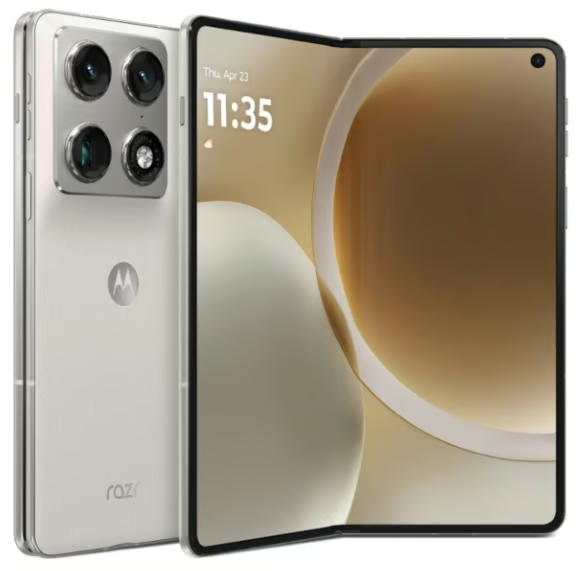
The primary drawback is software bloat. Motorola loaded the device with an overwhelming suite of competing artificial intelligence assistants—bundling Moto AI alongside Gemini, Perplexity, and Microsoft Copilot into a single crowded interface. Additionally, thermal throttling prevents its Snapdragon processor from matching peak synthetic scores, but its battery life and bundled pen utility make it a standout debut.
- Why it made the list: Stylus support gives the Razr Fold a practical advantage for people who want to use a foldable as a digital notebook. Its large battery and fast charging also make it a compelling productivity device.
- Who should buy it: Professionals, students and creative users who regularly take notes, annotate documents or sketch on a large screen. It is also suitable for people who want a book-style foldable with strong battery capacity.
- Who should skip it: Buyers who prioritize raw processing performance, the best camera hardware or a particularly subtle display crease.
Samsung Galaxy Z Flip 8: Best compact flip phone
The Samsung Galaxy Z Flip 8 is designed for people who want a full-size smartphone experience in a smaller package. Its 6.9-inch internal display provides the space expected from a modern flagship, while the 4.1-inch cover screen lets users check notifications, access widgets and handle quick tasks without opening the phone.
Samsung has refined the design with thinner dimensions and tapered sides that make opening and closing the device easier. The phone also benefits from a powerful Snapdragon 8 Elite Gen 5 processor, 12GB of RAM and Galaxy AI features.
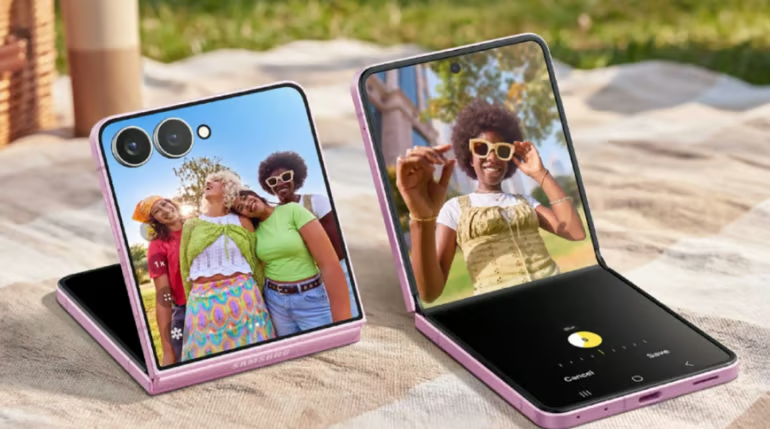
The cover screen is particularly useful for people who want to reduce how often they interact with their phones. Checking notifications, replying to messages and controlling music can often be done without unfolding the device. Samsung’s software support is another selling point. The company promises seven years of updates, giving the Flip 8 a longer support window than some competing clamshell models.
However, the compact design comes with limitations. The battery is smaller than those found in larger foldables, and the phone is relatively expensive for a device that does not offer the same camera or multitasking flexibility as a book-style model.
- Why it made the list: The Flip 8 offers a refined clamshell design, a useful cover display and long-term software support. It is one of the strongest options for buyers who value portability above a tablet-sized screen.
- Who should buy it: People who want a compact phone that can still provide a full-size display when opened. It is particularly suitable for users who value pocketability and quick access to notifications.
- Who should skip it: Buyers who need long battery life, extensive multitasking capabilities or a large inner screen for productivity.
Motorola Razr Ultra (2026): Best flip phone battery life
The Motorola Razr Ultra (2026) stands out because it addresses two common weaknesses of flip phones: battery endurance and charging speed.
Its 4,700mAh battery delivered 21 hours and 16 minutes in PCMag’s battery testing, the longest result among the folding phones in that publication’s comparison. That makes it particularly attractive to people who want a compact device without constantly worrying about charging.
The phone also has a 7-inch internal display and a 4-inch external screen. Motorola’s cover-screen software supports third-party applications, allowing users to handle more tasks without opening the phone. Its Snapdragon 8 Elite processor provides strong performance, while 68W wired charging helps users replenish the battery quickly. The device also has an IP48 rating for dust and water resistance. The device costs around $1,499.99 for the 512GB configuration.
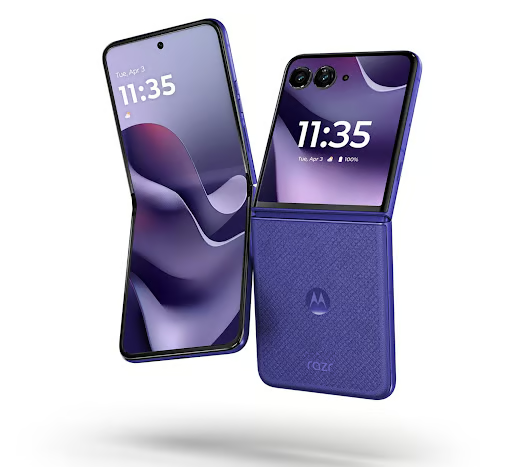
Design is another selling point. Motorola offers distinctive finishes, including materials and colors developed with Pantone. That gives the Razr Ultra a more individual look than many conventional flagship phones.
There are limitations. The 2026 model costs more than its predecessor, and it does not bring a major processor upgrade. Motorola’s software support also falls short of Samsung’s seven-year commitment.
- Why it made the list: Its battery performance is exceptional for a flip phone. The combination of a large cover screen, fast charging and distinctive design makes it one of the most appealing clamshell devices for heavy daily use.
- Who should buy it: People who want a compact phone with strong battery life, fast charging and a cover display capable of running applications.
- Who should skip it: Buyers who want the longest possible software support or are unwilling to pay a premium for a flip-style device.
Motorola Razr (2026): Best affordable foldable
Foldable phones remain expensive, but the Motorola Razr (2026) makes the category more accessible.
Starting at around $799, it costs substantially less than premium models such as the Galaxy Z Flip 8. It still offers a 6.9-inch internal display and a 3.6-inch external screen, allowing buyers to enjoy the basic advantages of a clamshell foldable without spending more than $1,000.
Its 4,800mAh battery is another positive. PCMag recorded 19 hours and 10 minutes in its testing, making it one of the strongest performers in the outlet’s battery comparison.

The phone uses MediaTek’s Dimensity 7450X processor, which keeps costs down but does not deliver the same performance as the chips in premium foldables. It handles everyday tasks adequately, although demanding applications and heavier multitasking can expose its limitations.
Motorola has also made compromises in display brightness and software support. CNET notes that the phone receives only three years of Android updates, which is considerably shorter than Samsung’s commitment for the Flip 8.
- Why it made the list: The Razr makes foldable hardware more affordable without abandoning the core clamshell experience. Its battery life is also impressive for its price.
- Who should buy it: Budget-conscious buyers who want to try a foldable phone, prefer a compact design and mainly use their devices for everyday activities.
- Who should skip it: People who want flagship performance, longer software support or the best possible camera experience.
Vivo X Fold 6: Best for photography
The Vivo X Fold 6 makes a strong case for buyers who do not want to sacrifice camera quality to get a foldable phone.
Its camera system includes a main sensor and a 3x telephoto camera that reviewers describe as unusually capable for the category. The phone also uses image processing that produces natural-looking photographs, avoiding some of the oversaturated results associated with competing devices.
The camera hardware is not its only strength. Vivo has equipped the device with an 8-inch inner display and a 6.5-inch cover screen. Both panels offer high brightness, making them suitable for outdoor use and media consumption. Its hinge is another highlight. It holds the display at different angles, giving users more flexibility when taking photographs, recording video or using the phone hands-free.
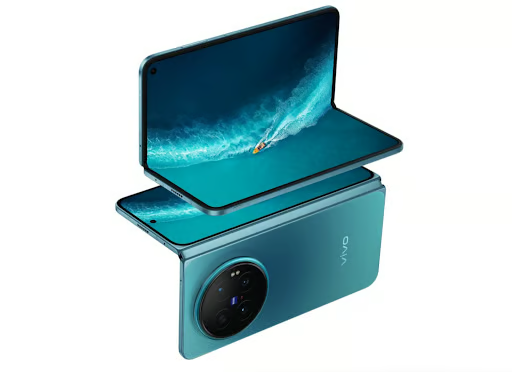
Performance is also competitive. The MediaTek Dimensity 9500 Super processor handles demanding applications, while the 6,900mAh silicon-carbon battery provides strong endurance. Its 80W wired charging helps reduce downtime.
There are some concerns, however. Trusted Reviews reported condensation inside the main camera lens during testing, along with software quirks such as a disappearing keyboard. Its ultrawide camera also falls behind the other two rear sensors. Availability may be another obstacle for buyers outside Vivo’s main markets.
- Why it made the list: The X Fold 6 combines a capable camera system with a large display, flagship performance and strong battery capacity. It is a compelling option for people who want a foldable that can also serve as their primary photography device.
- Who should buy it: Photography enthusiasts who want a large foldable display without giving up a versatile main and telephoto camera system.
- Who should skip it: Buyers who need reliable local availability, want a consistently polished software experience or are concerned about the reported camera condensation issue.
Samsung Galaxy Z Fold 8 Ultra: Best traditional book-style workhorse
If the squat passport styling of the standard Fold 8 does not appeal to your workflow, the Galaxy Z Fold 8 Ultra preserves the traditional book-style blueprint while shaving down physical bulk. It unfolds into an expansive 8.0-inch canvas, fronted by a roomy 6.5-inch cover display that acts and types like a standard premium phone.
Its standout achievement is hinge and chassis engineering. Measuring only 8.9mm folded and 4.1mm open, the Fold 8 Ultra feels remarkably like a normal smartphone when closed. Testing by Trusted Reviews highlighted Samsung’s new Flex Titanium hinge and anti-glare display coating, which handle ambient reflections better than earlier generations while minimizing display seam visibility. It also packs a larger 5,000mAh silicon-carbon battery with 45W wired charging, alongside an upgraded 200MP main camera and 50MP ultrawide sensor.
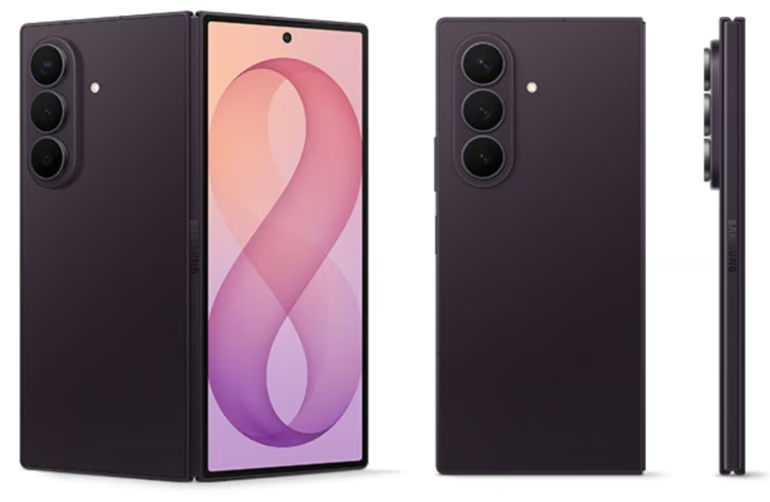
The drawbacks center on value and feature omissions. Despite its Ultra moniker and sky-high pricing, Samsung still omits internal S Pen stylus support. Furthermore, while the primary 200MP sensor takes crisp photos, the accompanying 10MP 3x telephoto module feels dated and underwhelming compared to dedicated camera flagships.
- Why it made the list: The Fold 8 Ultra is a powerful, refined option for people who prefer the traditional book-style design. It combines a large inner display, strong processing performance and Samsung’s mature foldable software.
- Who should buy it: Power users who want a premium foldable for gaming, multitasking and demanding applications, particularly those who prefer a conventional outer-screen shape.
- Who should skip it: Existing owners of recent Samsung foldables may not find enough improvements to justify upgrading. Buyers who need excellent zoom photography or stylus support should also consider alternatives.
How we selected these phones
To cut through promotional marketing and spec-sheet theater, our selections were evaluated across four core performance pillars reflected across independent testing bodies:
- Daily ergonomic viability: A phone that folds is useless if it feels like carrying a brick. We favored devices that have dropped folded thickness below 11mm and weights under 260 grams, ensuring they slip into standard pockets without straining seams.
- Real-world durability & ingress protection: Every device on this list was evaluated for hinge stability, screen-layer scratch resistance, and certified resistance against dust and liquids. Preference was given to units offering sealed ingress ratings (IP48 to IP68).
- Display utility & crease control: We analyzed inner and outer screen usability, viewing angles, anti-reflective coatings, and whether the hinge valley fades from view during daily video playback and web browsing.
- Sustained battery & thermal performance: Flexible frames leave little room for thermal dissipation and massive battery cells. We weighed calibrated lab runtimes (web browsing, streaming, and load tests) over manufacturer-claimed milliamp-hour ratings to ensure these handsets reliably survive a full working day.
What's hot at TechRepublic
- Blackpoint Cyber vs. Arctic Wolf: Which MDR Solution is Right for You?
- Why AWS Sellers Choose Deepgram Over Other Voice AI Tools
- SS&C Intralinks DealCentre AI vs. Datasite: Which platform is built for the future of dealmaking?
- SS&C Intralinks FundCentre AI vs. Juniper Square: Which platform better supports modern private markets fund managers?
- Verito vs. Rightworks: Which IT Provider Is Best for Your Firm?
What to check before buying a foldable for work
Foldable phones in 2026 are better than they’ve ever been. They’re more durable, more capable, and more practical than the fragile experiments of just a few years ago. Samsung’s Galaxy Z Fold 8 represents the current sweet spot of usability and performance, while Google’s Pixel 11 Pro Fold proves that durability concerns are finally being addressed.
But these remain enthusiast devices. The price premium is real, the durability risks haven’t vanished, and the software experience still varies by manufacturer.
Choose based on what you’ll actually use the phone for—not what the spec sheet promises. If a larger screen would genuinely improve how you work or consume content, the investment might be worth it. If you’re just curious about the technology, wait another generation. The phones will only get better.
Start with a task your current phone makes difficult. Reviewing an attachment while answering an email, comparing documents, or annotating a PDF may benefit from a larger inner display. A flip phone offers a different advantage: easier carrying while retaining a full-size screen when opened.
Try that task on the device before purchasing. Check text size, keyboard placement, split-screen behavior, and whether opening or closing the phone interrupts your work. Repeat the task on the cover display; if routine actions constantly require unfolding, the design may be inconvenient for your workflow.
For a company purchase, confirm that IT supports the exact model and operating system. Check device enrollment, work profiles, authentication, VPN access, and essential business apps. Review the remaining security-update period against the planned replacement cycle.
Compare ownership costs as well as purchase prices. Ask about inner-screen repairs, accidental-damage coverage, deductibles, replacement turnaround, and whether accessories are included. For an imported phone, verify carrier compatibility, local warranty eligibility, and access to authorized repairs.
Choose the foldable that improves a recurring task enough to justify those costs. If portability is your priority, focus on the cover-screen experience and folded dimensions. If productivity is the goal, prioritize app compatibility, multitasking, support, and repair arrangements.
Read more: If Apple and Google are on your shortlist, compare the iPhone Duo and Pixel 11 Pro Fold to see how their designs, work features, and $100 price difference affect the buying decision.