
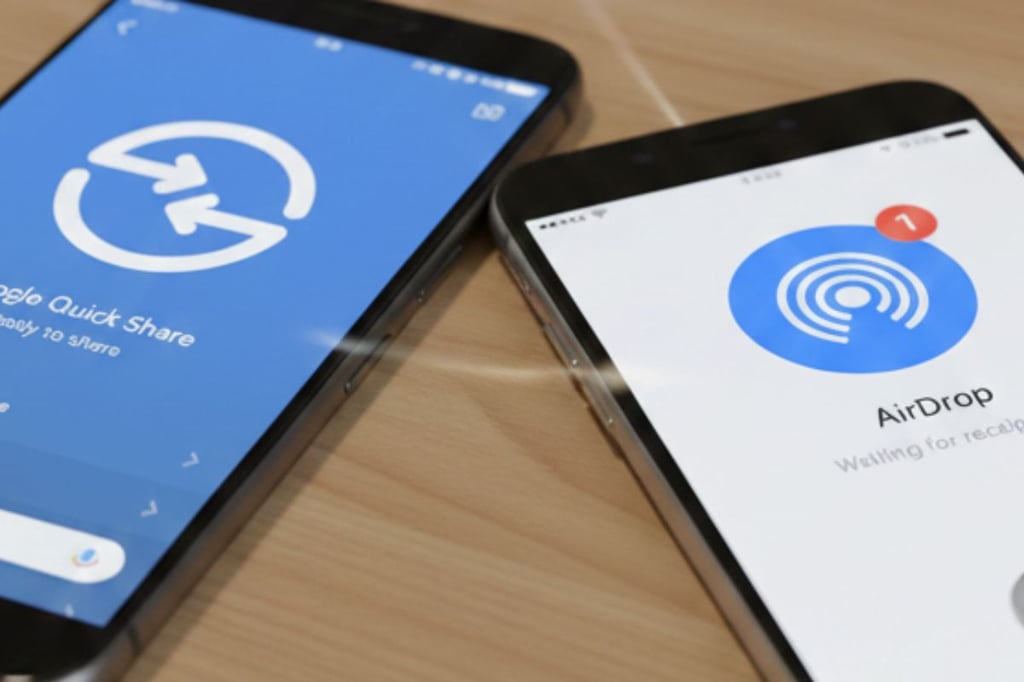


Google just cracked open one of Apple’s tightest lock-ins, giving Android users the ability to send files straight to iPhones using AirDrop-style transfers. For the first time, Android is stepping directly into a space Apple has long kept to itself.
In a new announcement, Google said the upgrade comes from its own engineering work, with security built in from the start.
How Google unlocked cross-platform file sharing
Google said Quick Share now links directly with Apple’s AirDrop, allowing Pixel 10 devices to send and receive files with iPhones, iPads, and Macs through a native, device-to-device connection. Transfers work when the receiving device is set to AirDrop’s “Everyone for 10 minutes” mode, allowing the Pixel to discover it and initiate the exchange.
Dave Kleidermacher, Google’s VP of Platforms Security & Privacy, wrote on Google Security Blog that the feature relied on a direct, peer-to-peer channel that kept content off servers and avoided logging, making cross-platform sharing as straightforward as sending a photo to another Android phone.
He also noted that the system required recipients to approve incoming files, maintaining user control over what gets shared.
A file-sharing bridge designed to stay locked down
Google said the new connection was built under the same security rules it applies to its flagship products.
Kleidermacher said the team ran threat models, design reviews, and in-house penetration tests before releasing the feature. He added that the core of the interoperability layer was written in Rust, a memory-safe language now used across Android to eliminate entire classes of vulnerabilities tied to data parsing.
The company also brought in independent testers. NetSPI examined the Quick Share–AirDrop link and reported that it was secure, didn’t leak information, and was “notably stronger” than other industry implementations. An outside review from Stanford security expert Dan Boneh called Google’s approach a strong model for safe cross-platform interoperability.
Google credited the independent assessment and the server-free, device-to-device link with keeping cross-platform sharing both private and intentional.
Google also said the work was done entirely in-house. Google spokesperson Alex Moriconi told The Verge, “We accomplished this through our own implementation,” confirming the feature was developed without Apple’s involvement.
Must-read Apple coverage
- Nearly 7 in 10 iPhone Owners Plan iPhone 17 Upgrade
- Apple Prepares AI-Powered Siri Upgrade With Google Search Integration
- Apple’s Xcode 26 Beta Now Supports GPT-5 and Claude
- Apple’s Vision Pro Adoption Stalled As Content Released ‘Drip by Drip’
Opening the door to fuller compatibility
According to Google, this launch is the start of a wider effort to make everyday tasks work more smoothly between Android and iOS.
The tech titan noted earlier steps in the same direction, including RCS arriving on iPhones and the launch of unknown-tracker alerts across both platforms. The company said users had long asked for simpler ways to move files between devices, and that sharing “should just work” regardless of the phone someone carries.
Kleidermacher said that the new Quick Share-AirDrop link marked “just the first step” toward deeper interoperability. He added that Google hoped to support additional sharing modes, such as Apple’s “Contacts Only,” should further cooperation become possible.
Google made it clear that it intends to bring the feature to more devices over time, setting the groundwork for a more consistent cross-platform experience.
Google also moved quickly on the browser front, pushing an emergency Chrome fix after uncovering active exploitation of a newly discovered zero-day.